
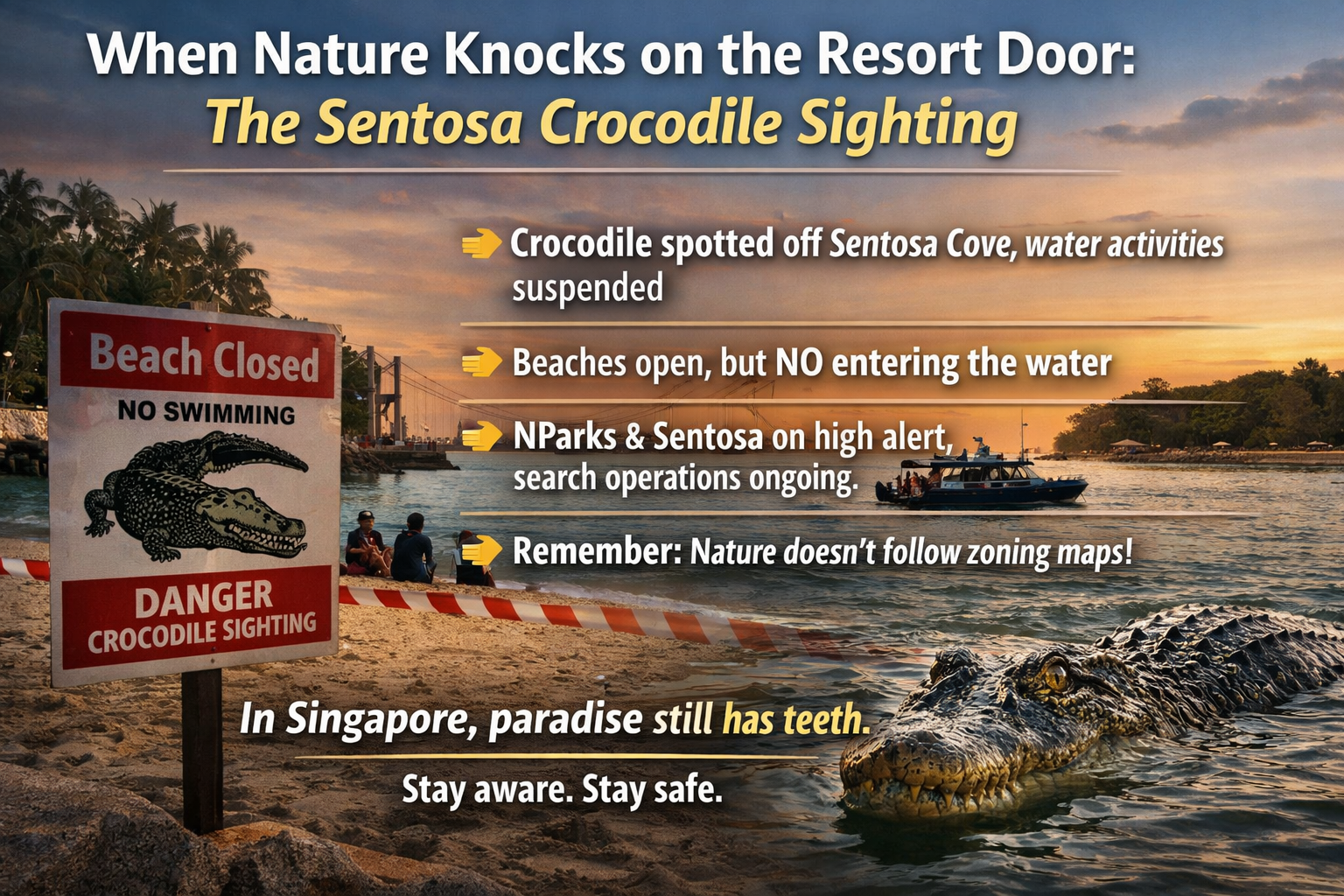
When Nature Knocks on the Resort Door: The Sentosa Crocodile Sighting
On what was supposed to be just another sun-soaked weekend at Singapore’s favourite island getaway, nature reminded everyone who truly owns the waters.
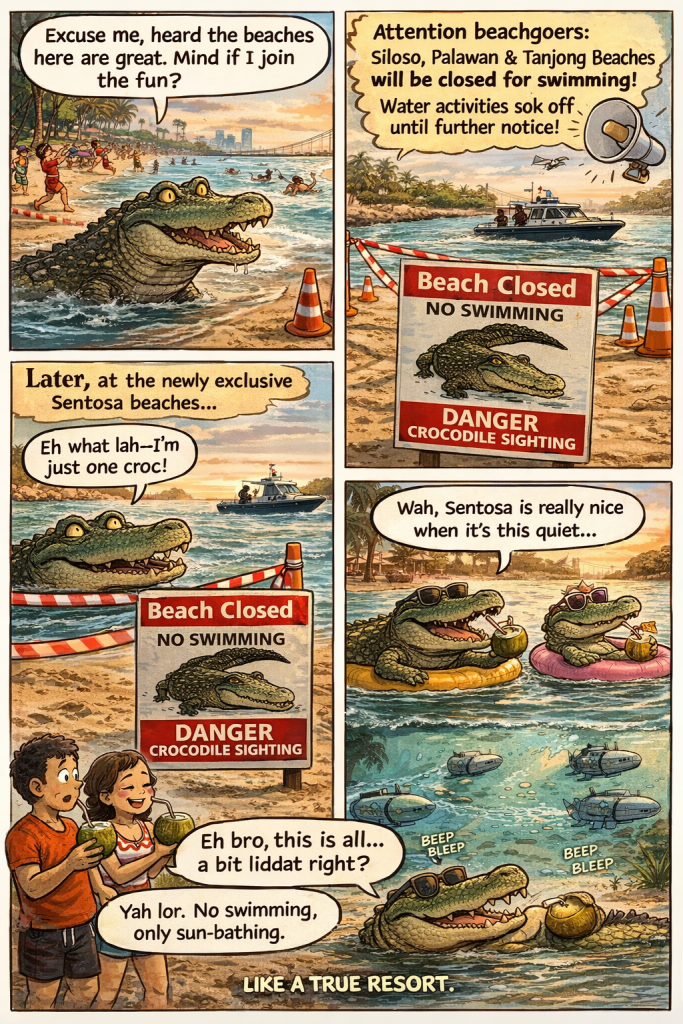
Following a reported crocodile sighting near Sentosa, water activities at Siloso, Palawan and Tanjong beaches were swiftly suspended. Swimmers were asked to stay ashore, kayaks pulled from the water, and lifeguards shifted from “watchful” to “lockdown mode”.
For many, it sounded surreal. A crocodile? At Sentosa?
Yet this incident is less shocking—and more instructive—than it first appears.
What Happened?
According to reports, authorities received a credible sighting of a crocodile in waters near Sentosa Cove. As a precaution, Sentosa Development Corporation and NParks suspended all water-based activities while search and monitoring operations began.
Importantly:
- Beaches remained open for land activities
- No injuries were reported
- The response was preventive, not reactive
In short: calm, controlled, and by the book.
Why This Is Actually Not That Strange
Singapore is ultra-modern—but it is not wildlife-free.
Saltwater (estuarine) crocodiles are native to Southeast Asia. Over the years, sightings have occurred in places like Sungei Buloh, Kranji, Marina East, and even urban waterways. With:
- Rising sea levels
- Mangrove habitats nearby
- Heavy maritime traffic
…it’s entirely plausible for a crocodile to wander beyond “expected” zones.
Sentosa, despite its resorts and beach clubs, sits right next to natural coastal and estuarine systems.
The surprise is emotional—not ecological.
Safety First, Tourism Second (And That’s a Good Thing)
The rapid suspension of water activities shows how Singapore handles risk:
- No denial
- No panic
- No waiting for proof beyond doubt
This approach frustrates some beachgoers, but it prevents far worse outcomes. Crocodile incidents elsewhere in the region show that hesitation costs lives.
Singapore chooses inconvenience over tragedy. Every time.
A Reminder We Don’t Hear Often Enough
This incident quietly delivers a powerful message:
You can build resorts, beaches, and infinity pools—but nature doesn’t read zoning maps.
Sentosa isn’t becoming “dangerous.”
Singapore isn’t “losing control.”
What’s happening is something far more honest: coexistence.
What Visitors Should Do
Authorities have advised:
- Do not enter the water until restrictions are lifted
- Report any sightings immediately
- Stay calm—do not approach or provoke wildlife
These guidelines aren’t just about crocodiles. They apply to any encounter with wildlife in urban environments.
The Bigger Picture
As cities grow denser and climate patterns shift, encounters like this may become more common, not less. The real question isn’t “Why did this happen?” but:
How well are we prepared when it does?
On that front, Singapore’s response sets a benchmark many countries still struggle to meet.
Final Thought
The Sentosa crocodile sighting isn’t a headline about fear.
It’s a story about respect—for ecosystems, for safety, and for reality.
Paradise doesn’t mean sterilised.
Sometimes, it still has teeth.
🐊 Did You Know?
- Saltwater crocodiles are native to Singapore.
They’re not “lost” animals — they’ve lived in local mangroves and estuaries long before urban development. - They can travel far in the open sea.
Saltwater crocodiles are strong swimmers and have been recorded crossing tens of kilometres between islands. - Sightings don’t mean danger is imminent.
Most crocodiles avoid humans. Authorities act early to prevent risk, not because an attack is likely. - Singapore actively monitors crocodile populations.
Agencies regularly track sightings, relocate animals when needed, and manage habitats to reduce conflict. - Urban wildlife encounters are increasing globally.
Rising sea levels, coastal development, and climate shifts mean humans and wildlife cross paths more often — even in cities.
Sources
- AsiaOne – Water activities suspended at 3 Sentosa beaches after crocodile sighting
- Channel NewsAsia – Water activities at Sentosa beaches suspended after crocodile sighting
- South China Morning Post – Singapore halts water activities at Sentosa after crocodile sighting




Leave a Reply