
Asteroid 2026 JH2 Discovery Network 🟢 Safe Flyby
The 2026 JH2 flyby becomes more than a single asteroid story when viewed through its discovery chain. From Mount Lemmon’s sky surveys to public livestreams, NASA-style planetary defense monitoring, Singapore skywatcher spaces, and historic observatories like Palomar, this SpotMe section connects the asteroid event to real-world discovery points.
Related GoXpot discovery path — 5 connected points
Compare this asteroid discovery network with GoXpots near you
Your exact location isn’t shown — it is only used to estimate distance and display nearby places.
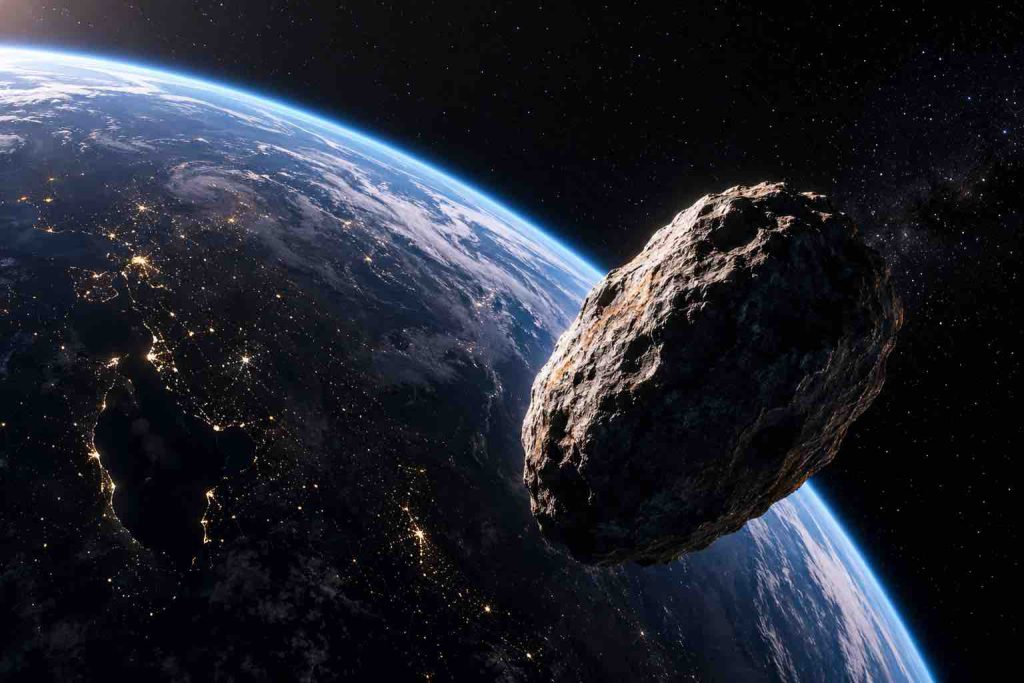
For a brief moment in May 2026, astronomers around the world turned their attention toward a newly discovered object moving rapidly through Earth’s cosmic neighborhood. The asteroid, officially designated 2026 JH2, is expected to make an unusually close — but completely safe — flyby of Earth on 18 May 2026. Despite dramatic headlines circulating online, scientists emphasize that there is currently no impact threat associated with this object.
What makes 2026 JH2 especially interesting is not danger, but timing. The asteroid was only discovered days before its closest approach, giving astronomers a narrow observation window to calculate its orbit and study its characteristics.
What Is Asteroid 2026 JH2?
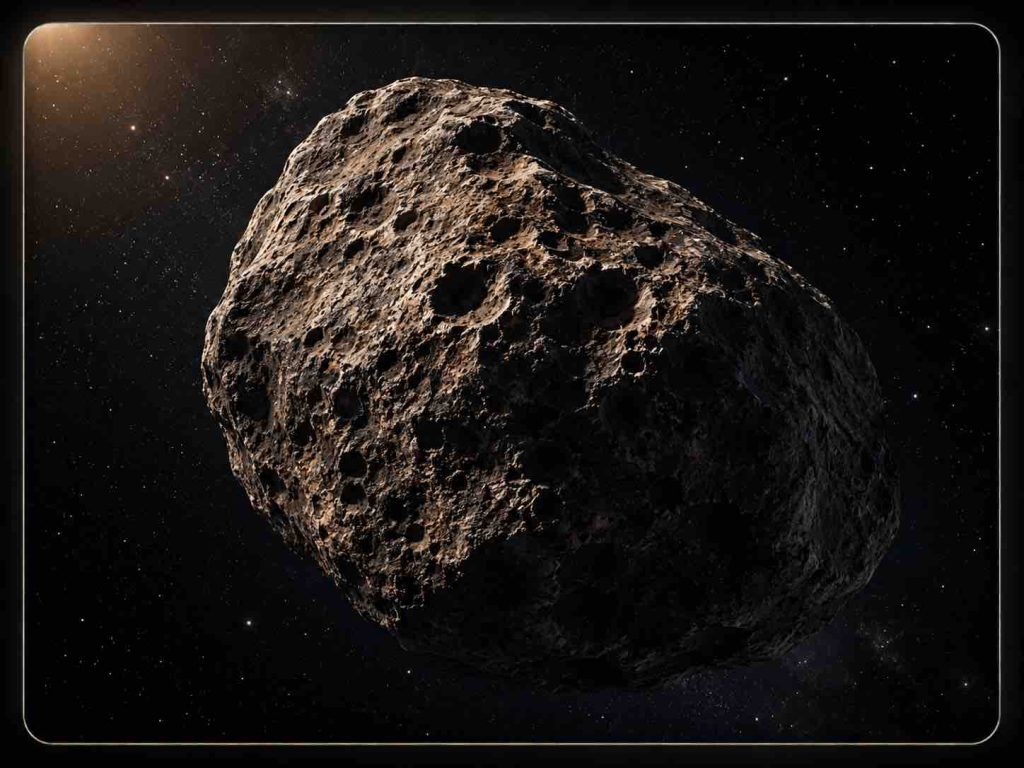
2026 JH2 is classified as a near-Earth asteroid (NEA) and more specifically an Apollo-type asteroid. Apollo asteroids are objects whose orbits cross Earth’s orbital path around the Sun. These are among the most heavily monitored categories of asteroids because their trajectories periodically bring them close to Earth.
The asteroid was discovered on 10 May 2026 by the Mount Lemmon Survey in Arizona, one of several sky surveys dedicated to detecting potentially hazardous near-Earth objects.
Current estimates suggest the asteroid measures somewhere between 15 and 35 meters wide — roughly comparable to a city bus or a small office building.
How Close Will It Get to Earth?
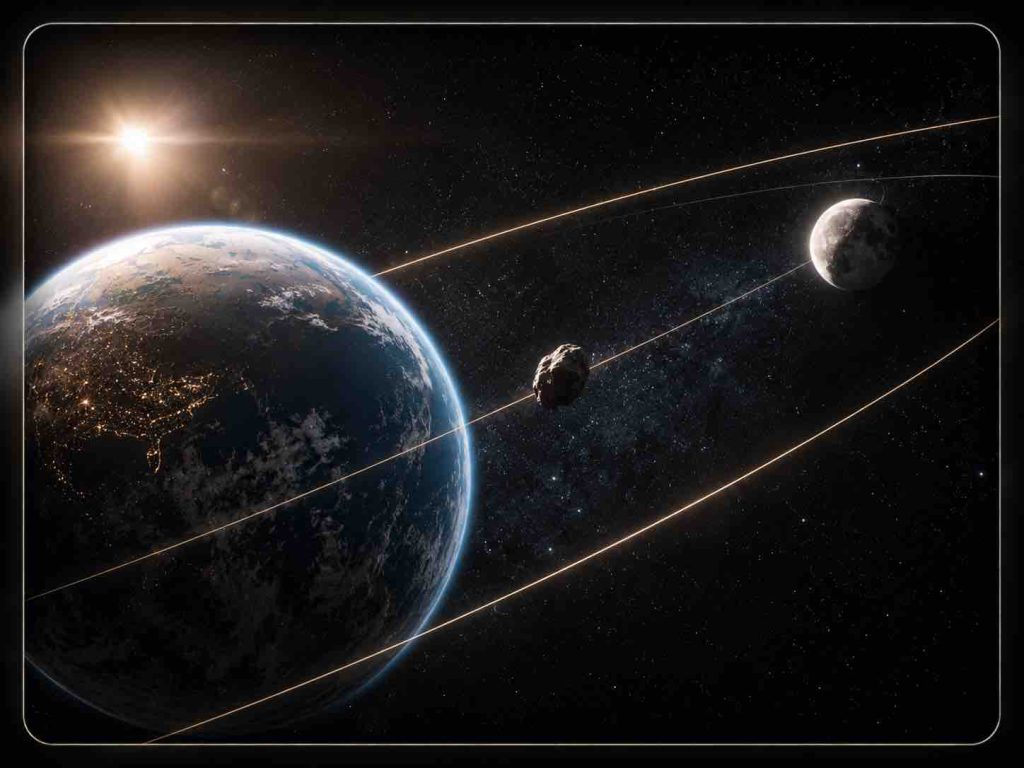
The closest approach is expected to occur on 18 May 2026 at approximately 21:23 UTC. At that point, the asteroid is projected to pass around 90,000–91,000 kilometers from Earth.
That means the asteroid will travel well inside the Moon’s orbital distance, making it one of the closer asteroid flybys publicly tracked this year.
Why Scientists Are Paying Attention
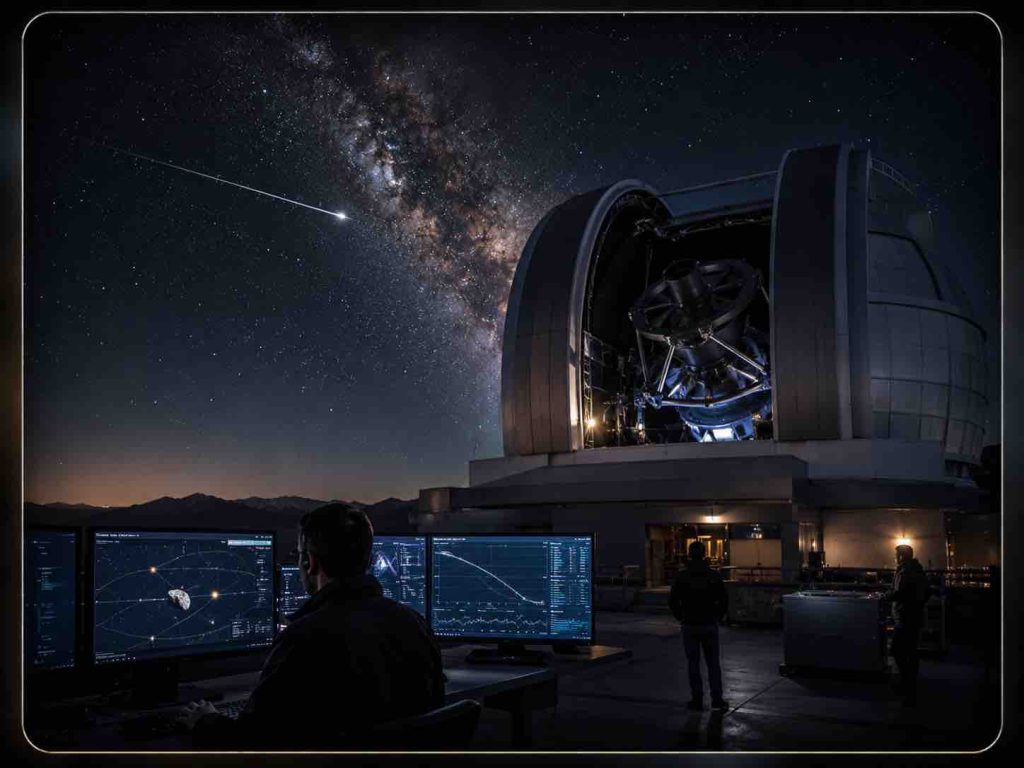
The excitement surrounding 2026 JH2 comes from several unusual factors.
First, the asteroid was discovered only days before its close flyby. Small objects like this are difficult to detect until lighting conditions and viewing angles become favorable.
Second, the event provides astronomers with a real-world opportunity to test orbital calculations, and rapid international observation coordination.
Could 2026 JH2 Hit Earth?
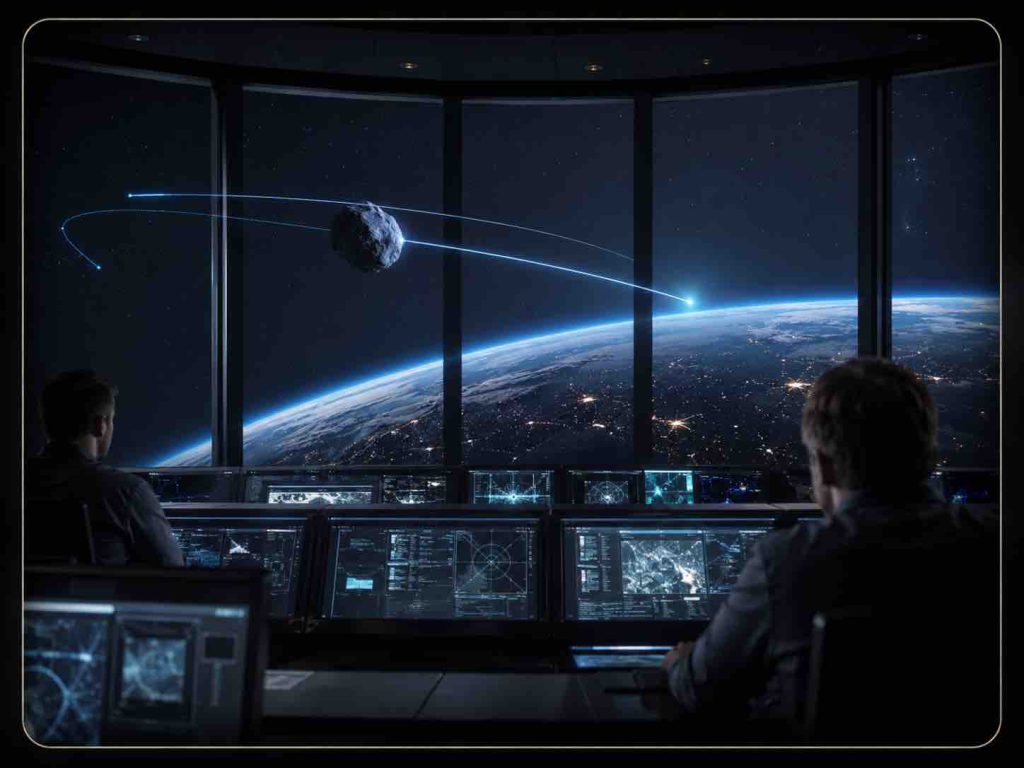
No current observations indicate any impact risk.
Astronomers worldwide have refined the asteroid’s orbit using multiple observations, and all major scientific sources confirm the flyby will remain safely distant from Earth.
No emergency alerts or unusual atmospheric events are expected.
Can You See the Asteroid?
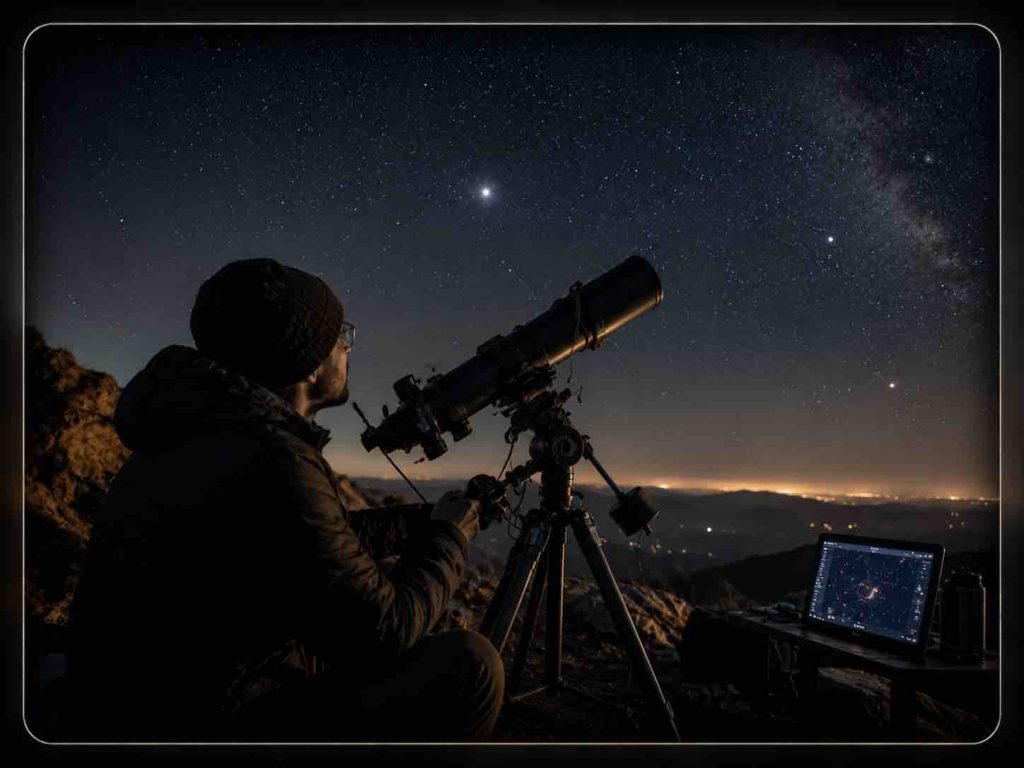
The asteroid will likely not be visible to the naked eye, but observers using telescopes or astronomy livestreams may be able to follow its movement across the night sky.
The Virtual Telescope Project has announced plans to livestream the encounter using robotic telescopes.
Why Small Asteroids Matter
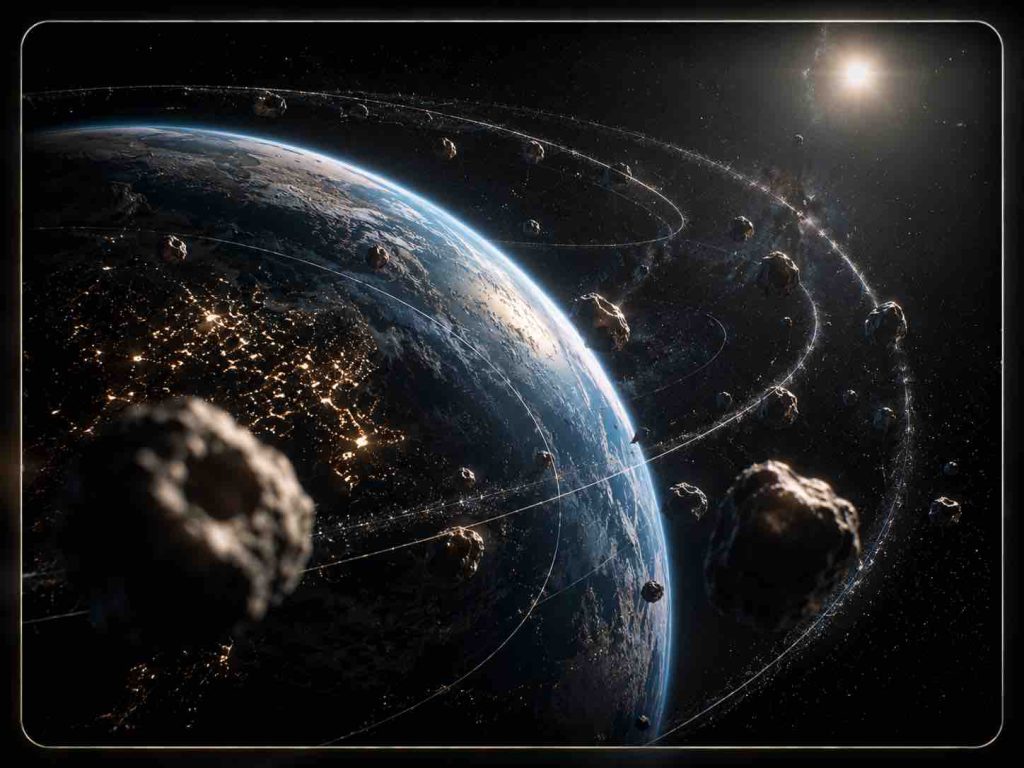
Smaller asteroids are scientifically important because they are:
- Harder to detect early
- Far more common than giant asteroids
- Useful for improving global detection systems
Events like this help researchers improve monitoring technology and refine planetary defense preparedness.
The Bigger Picture
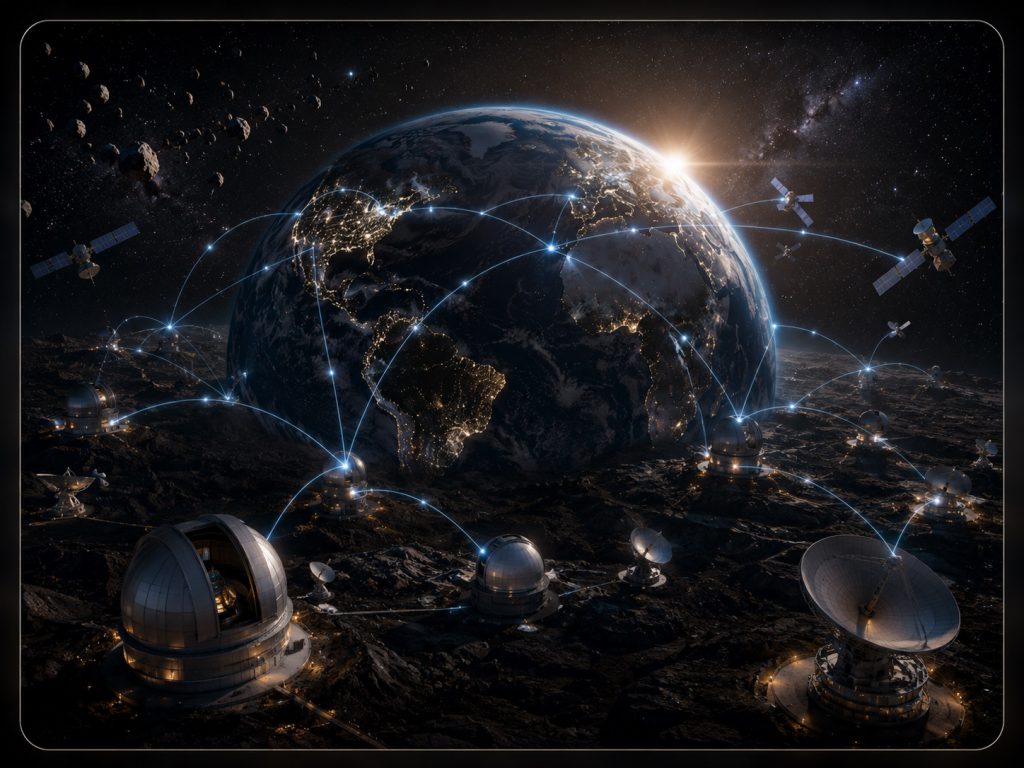
2026 JH2 is ultimately less a story about danger and more a demonstration of how modern astronomy operates in real time.
Within days of discovery, observatories around the world coordinated tracking efforts, refined orbital calculations, and informed the public about the event.
The flyby highlights humanity’s growing capability to monitor potentially hazardous objects in near-Earth space.
Final Thoughts
Asteroid 2026 JH2 may pass remarkably close to Earth in astronomical terms, but scientists remain clear that it does not pose a known threat.
Instead, the event offers a fascinating reminder that Earth exists within a dynamic Solar System filled with constantly moving celestial objects — many of which modern astronomy can now track with extraordinary precision.




Leave a Reply