
🌍 What is FIFA?
FIFA (Fédération Internationale de Football Association) is the global governing body for football (soccer). It is responsible for overseeing international competitions, managing global ranking systems, and supporting development programs across 211 member associations worldwide. The organization acts as the central authority that connects national football federations under a unified global framework.
Official site: FIFA
At its core, FIFA functions as a coordinating institution that ensures international football operates under standardized rules and shared governance structures.
🏛️ Basic Facts About FIFA

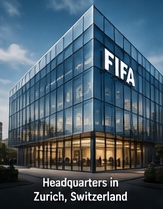
FIFA was founded in 1904 and is headquartered in Zurich, Switzerland. Today, it includes 211 member associations, making it one of the largest international sports federations in the world.
Its governance model is built on a federation of national football bodies, where each member country has representation and voting rights within the FIFA Congress. FIFA also works closely with the International Football Association Board (IFAB), which is responsible for maintaining and updating the Laws of the Game.
⚽ FIFA Core Responsibilities

International Competitions
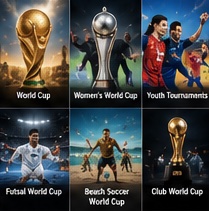
FIFA organizes and oversees several major global tournaments that define international football. The most prominent is the FIFA World Cup, but the organization also manages the Women’s World Cup, youth competitions such as the U-20 and U-17 World Cups, as well as futsal and beach soccer tournaments. In addition, FIFA runs the Club World Cup, which brings together top club teams from different continents.
Rankings System
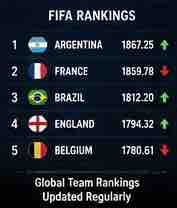
FIFA maintains official global rankings for both men’s and women’s national teams. These rankings are calculated using a performance-based system that considers match results, the strength of opponents, the importance of each match, and expected performance outcomes. The ranking system is designed to reflect both consistency and competitiveness over time.
Rules and Governance
FIFA does not independently define the Laws of the Game but instead collaborates with IFAB to establish and maintain them. Beyond rules, FIFA also enforces disciplinary actions, monitors fair play regulations, and ensures that international football competitions adhere to global standards of conduct and governance.

Development Programs
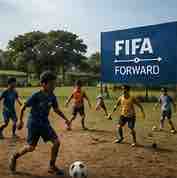
A significant part of FIFA’s role involves global football development. Through initiatives such as the FIFA Forward program, funding is distributed to national associations to improve infrastructure, build stadiums, support academies, and strengthen grassroots football. These programs are intended to reduce inequality in football development between nations.
Global Coordination
FIFA is responsible for managing the international match calendar and coordinating with continental confederations. It also oversees qualification systems for major tournaments, ensuring that global competitions remain structured and balanced across regions.
🌐 FIFA Global Structure
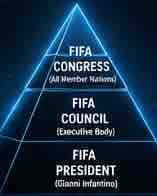
FIFA’s governance system is layered. At the top is the FIFA Congress, which includes all member nations and serves as the highest decision-making body. Below it is the FIFA Council, which handles executive decisions and strategic direction. The FIFA President, currently Gianni Infantino, represents the organization globally and leads its executive functions.
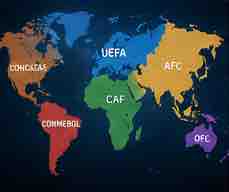
Football is further organized through six continental confederations. UEFA governs Europe, AFC manages Asia, CAF oversees Africa, CONMEBOL represents South America, CONCACAF covers North and Central America, and the OFC manages Oceania. Each confederation runs its own regional tournaments and qualification pathways that feed into FIFA competitions.
🌍 FIFA World Cup (Flagship Event)
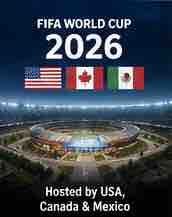
The FIFA World Cup is widely regarded as the most-watched sporting event in the world. It is held every four years and brings together national teams from across the globe to compete for the title of world champion.
Starting from 2026, the tournament expands from 32 to 48 teams, significantly increasing the number of matches and participating nations. The new format is expected to include over 100 matches and introduces a more extensive knockout stage, making the tournament larger and more complex than any previous edition.
The 2026 World Cup will be jointly hosted by the United States, Canada, and Mexico, marking one of the most geographically expansive tournaments in FIFA history.
💰 FIFA Revenue Model

FIFA generates substantial revenue through multiple channels. The largest share comes from broadcasting rights, followed by global sponsorship agreements. Additional income is generated through ticket sales, hospitality packages, licensing deals, and official merchandise.
The World Cup cycle alone produces billions of dollars in revenue every four years, making FIFA one of the most financially powerful sports organizations in the world.
🧠 FIFA Rankings System (Full Explanation)

The FIFA ranking system is based on an Elo-inspired points model used to measure national team performance over time. Teams gain or lose points after each match depending on the result, the strength of the opponent, and the importance of the game.
The system can be expressed as:
P_new = P_old + I × (W − We)
Where:
P_old = a team’s existing ranking points
I = match importance (weighting factor)
W = actual match result (win = 1, draw = 0.5, loss = 0)
We = expected result based on the rating difference between the two teams
Match importance varies by competition. Friendly matches carry the lowest weighting, while major tournaments such as World Cup qualifiers and the FIFA World Cup carry the highest weighting.
The expected result is calculated from the difference in team ratings, meaning stronger teams are statistically expected to win more often. This also means that results are measured against expectations, not just outcomes.
For example, if a lower-ranked team defeats a higher-ranked opponent in a competitive match, it gains a larger number of ranking points because the result is considered an “upset” against expectations.

⚖️ FIFA Politics & Controversies

FIFA has faced significant political and ethical challenges throughout its history. Before 2015, the organization was heavily criticized for corruption issues involving World Cup bidding processes, broadcasting contracts, and internal governance scandals. Investigations revealed large-scale bribery networks and led to arrests and bans of multiple officials.
Following these events, FIFA entered a reform phase after 2016. Changes included leadership term limits, restructuring of ethics committees, improved financial transparency, and expanded development funding programs aimed at rebuilding trust.

Despite these reforms, criticism continues. Concerns remain around centralized decision-making, political influence in voting processes, debates over World Cup expansion, and accusations of sportwashing. These issues highlight the ongoing tension between global governance, politics, and commercial interests in football.
🧭 Why FIFA Is Politically Complex
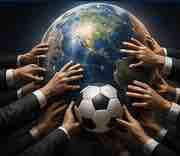
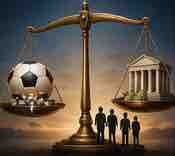
FIFA operates in a unique environment that combines global sport governance, multi-billion-dollar commercial activity, and international political influence. Because it is not regulated like a traditional government body, its decisions often reflect a balance between sporting integrity, financial interests, and geopolitical considerations.
This complexity makes FIFA both influential and controversial, as it must manage competing interests from nations, sponsors, and football stakeholders worldwide.
🔄 Why FIFA Rankings Matter
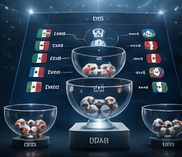
FIFA rankings play an important role in shaping international football. They determine seeding in tournaments, influence qualification groupings, and affect the distribution of teams in competition draws. Beyond competition structure, rankings also impact national reputation and can influence sponsorship value and media attention.
🧾 Conclusion
FIFA is far more than a sports organization. It operates as a global governance system for football, combining political structure, financial power, mathematical ranking models, and worldwide tournament management.
Its evolution continues to reflect a balance between expansion, reform, and ongoing controversy, making it one of the most influential institutions in global sport.





Leave a Reply