
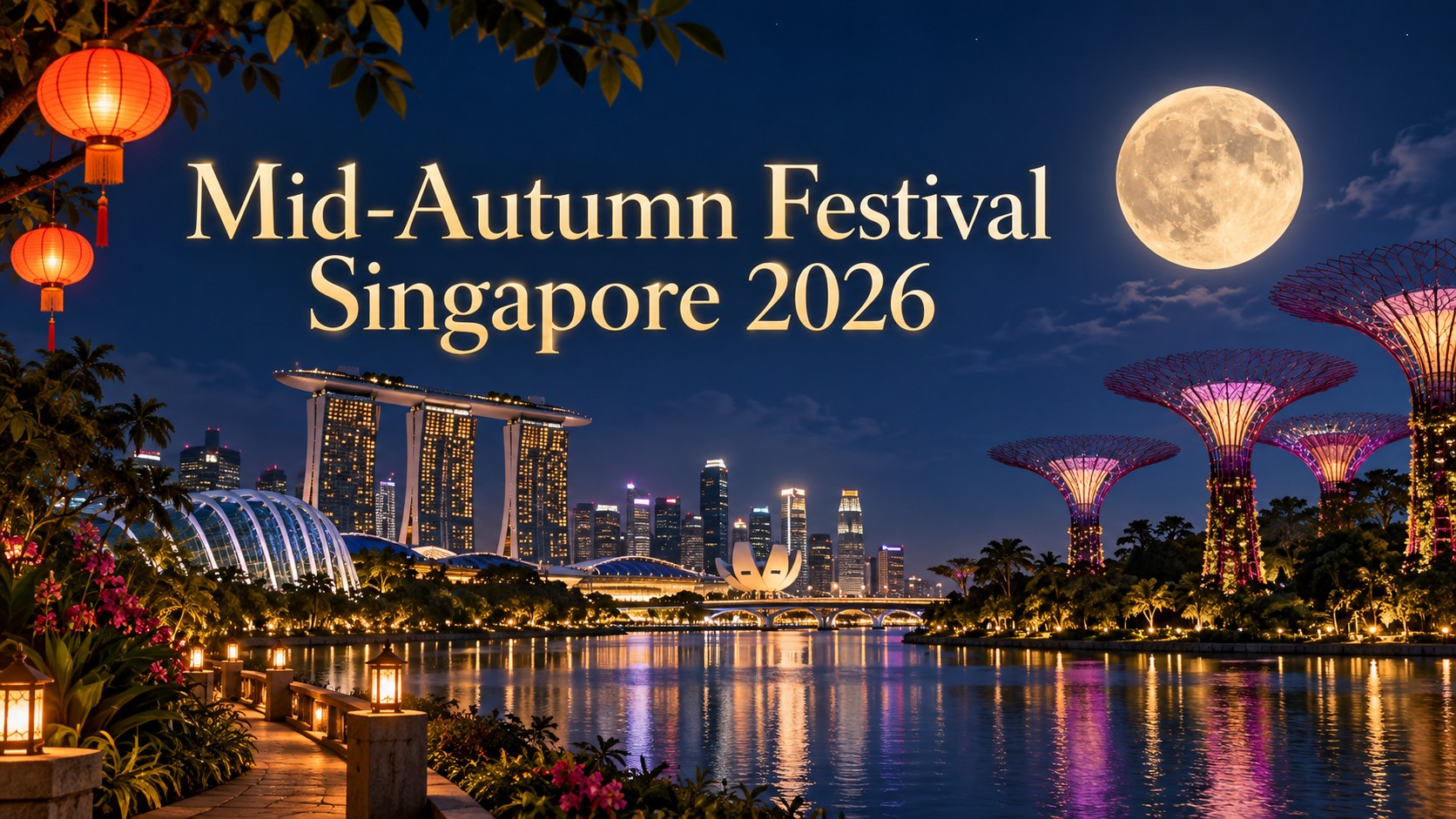
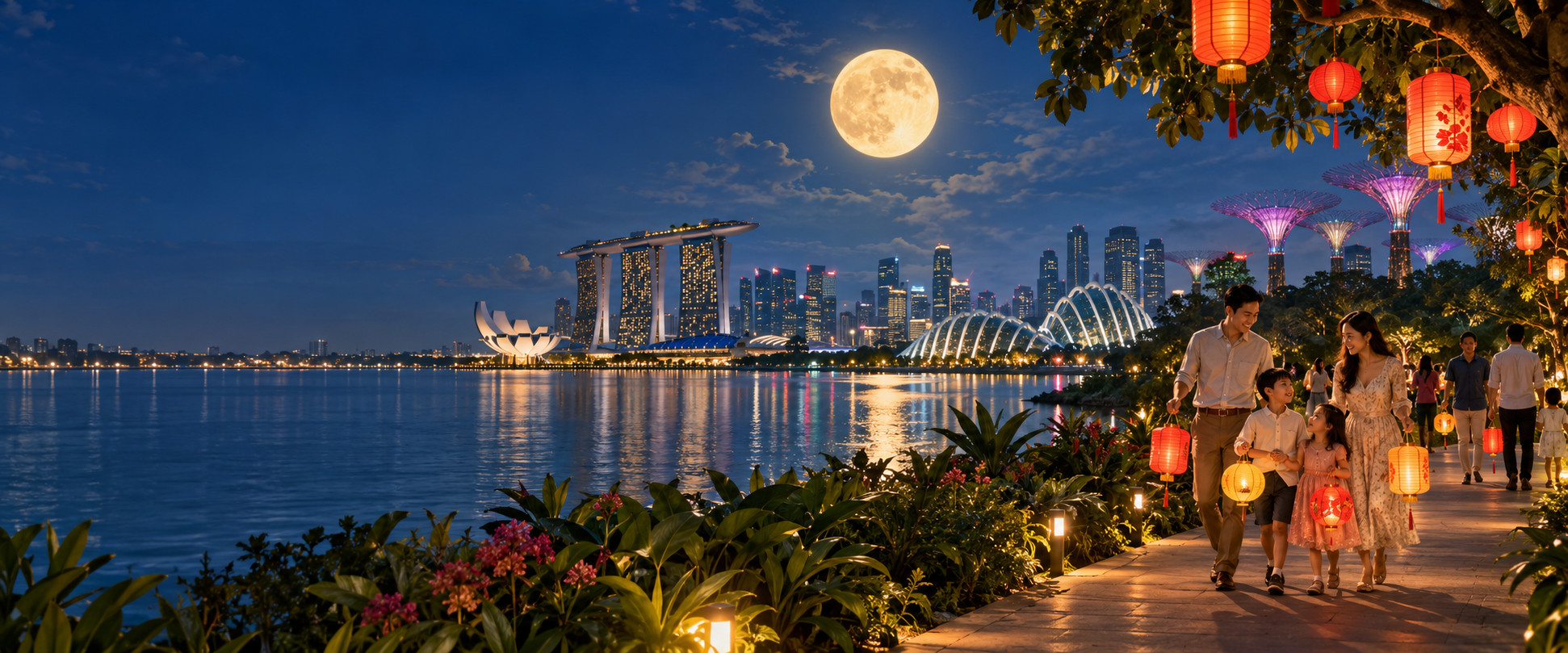
Mid-Autumn Festival Singapore 2026
A reader-friendly guide to reunion, mooncakes, lantern traditions and planning a thoughtful celebration in Singapore.
On Friday, 25 September 2026, families and communities across Singapore will mark the Mid-Autumn Festival, one of the most recognisable celebrations in the Chinese cultural calendar. Its imagery is instantly familiar: a bright moon, lanterns glowing after sunset, mooncakes divided into small wedges and gatherings that bring several generations around the same table. Yet the festival is more than a collection of symbols. It is a story about reunion, memory and the ways traditions change as they travel across time and place.
The festival falls on the fifteenth day of the eighth month of the Chinese lunisolar calendar. That places it near the September equinox, when the moon has long served as a seasonal marker and a focus for poetry, storytelling and family observance. In 2026, the date corresponds to 25 September. The calendar is the first firm anchor for this year’s celebration. Specific public programmes in Singapore require separate confirmation from their organisers, and visitors should check official listings before travelling.
Why the full moon matters
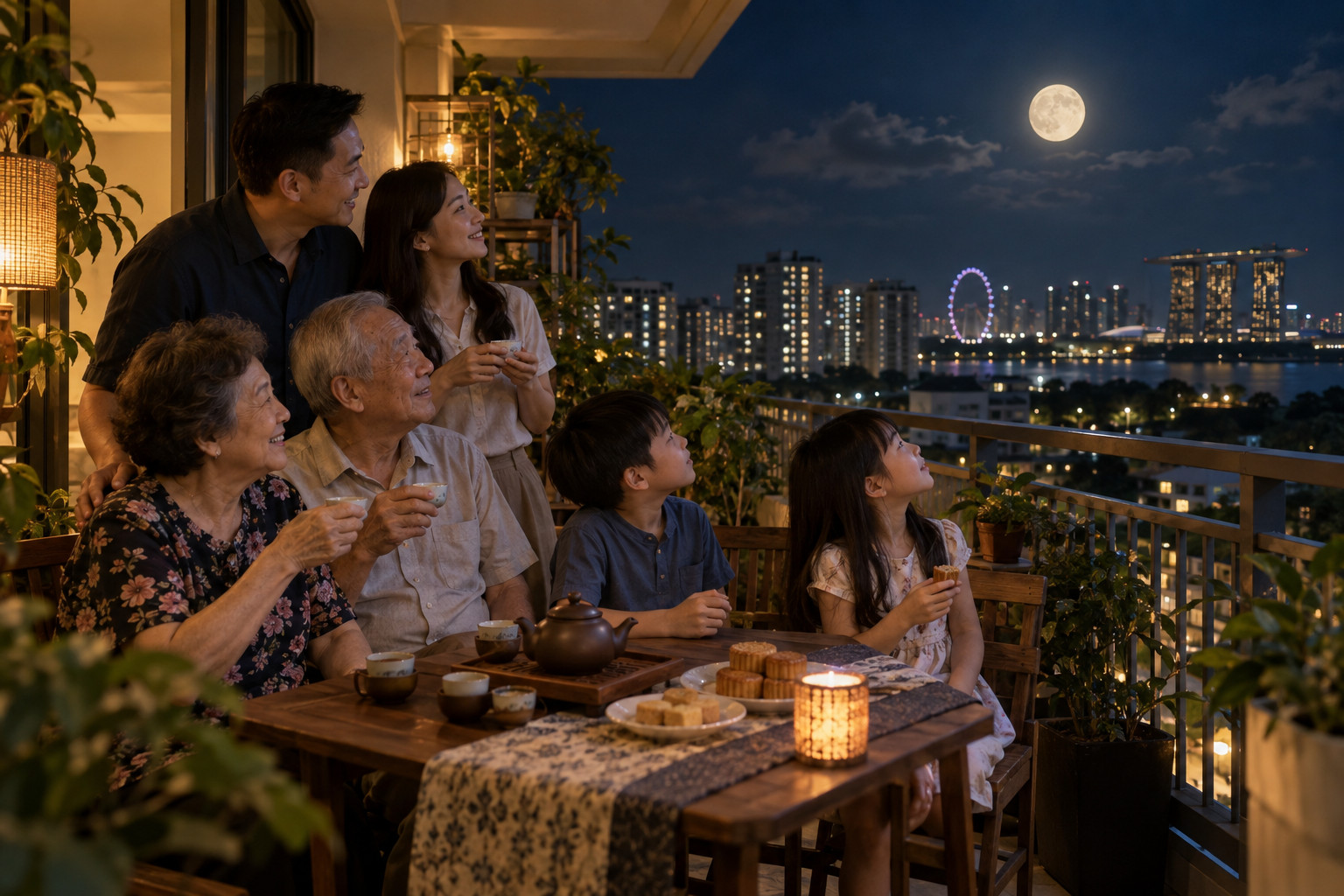
The round moon is commonly associated with completeness and reunion. That symbolism helps explain why the festival continues to resonate even when the agricultural rhythms behind older harvest celebrations feel distant from urban life. A family may no longer harvest crops together, but the idea of returning, sharing food and looking at the same moon still carries emotional force.
Moon viewing also gives the festival an unusual quality: its central image belongs to everyone. It can be experienced from a park, a balcony, a neighbourhood walkway or the window of a home. Public lantern displays may be spectacular, but the celebration does not depend on a ticketed attraction. At its simplest, it asks people to pause, look upward and remember who is absent as well as who is present.
That combination of joy and longing appears throughout Mid-Autumn poetry and folklore. Reunion is meaningful precisely because separation exists. In modern Singapore, where families may be spread across countries and time zones, a shared photo, video call or delivered box of mooncakes can become a contemporary version of gathering beneath one moon.
Chang’e, the Jade Rabbit and stories in the sky
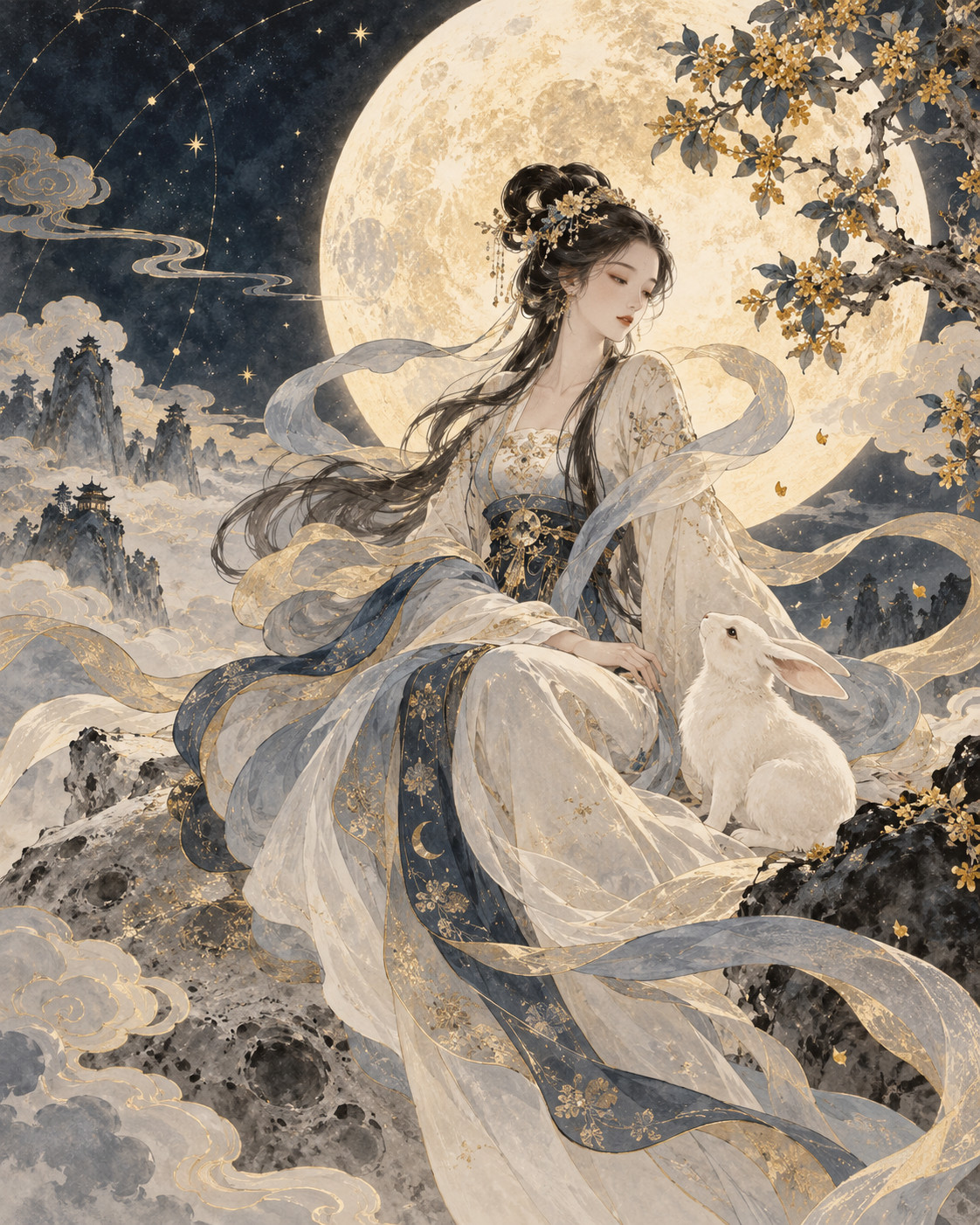
The best-known story associated with the festival is the legend of Chang’e, the woman who ascends to the moon after taking an elixir of immortality. The tale exists in multiple versions, and details vary: Chang’e may act to protect the elixir, take it under pressure or make a tragic choice. Treating one version as the single definitive account misses the way folklore works. Each retelling reflects the values and questions of the people telling it.
Alongside Chang’e is the Jade Rabbit, often imagined pounding the ingredients of an immortal medicine. Children looking at the moon may be invited to find the rabbit’s outline in its darker patches. Other stories introduce the archer Hou Yi or Wu Gang, who repeatedly cuts a tree that grows back. Together, these figures turn the moon into a stage on which ideas about sacrifice, consequence, perseverance and separation can be explored.
Why mooncakes are shared
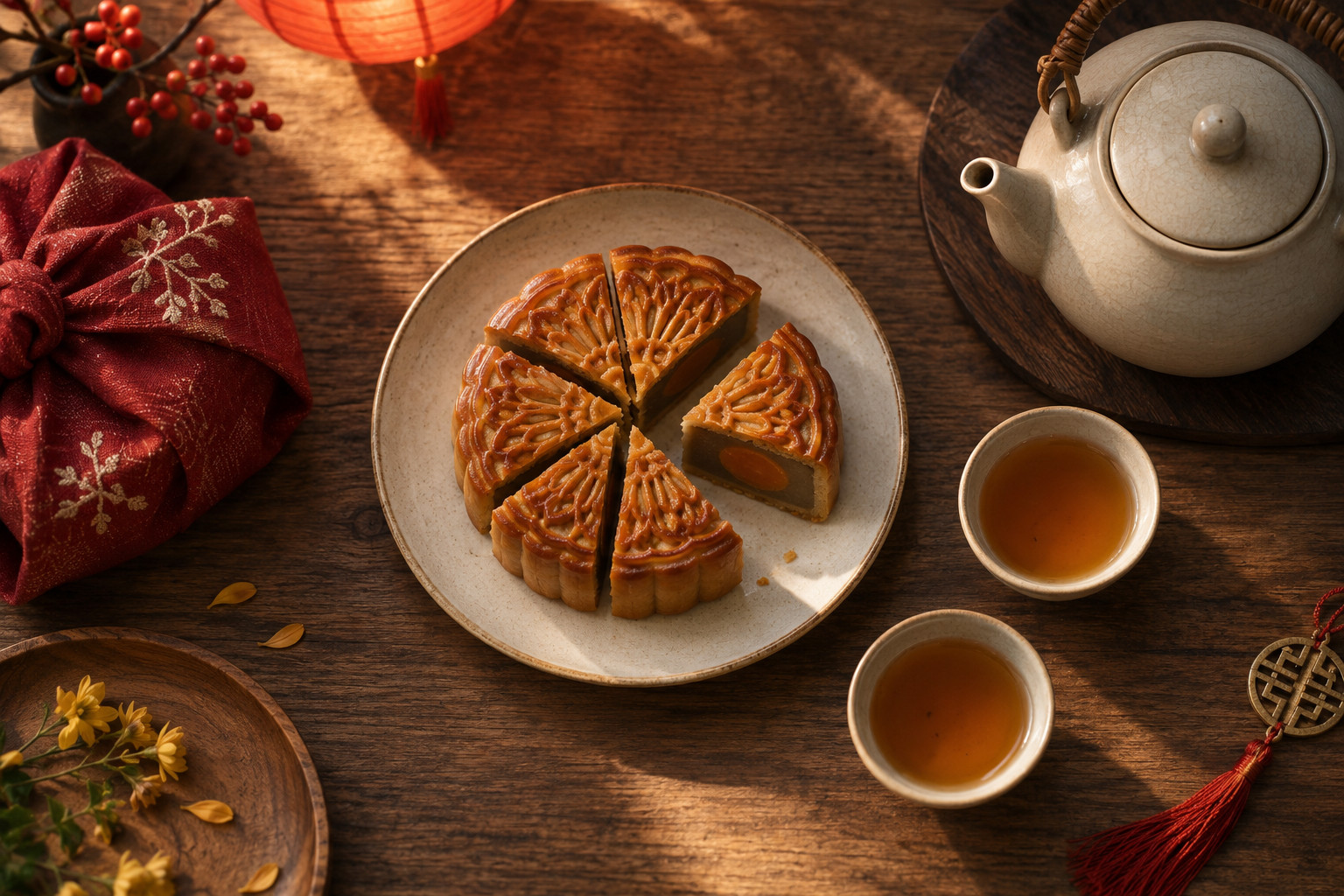
Mooncakes give the festival’s round symbolism a physical form. Traditional styles may contain lotus-seed or bean paste, nuts and salted egg yolk, while contemporary ranges include snow-skin versions and flavours shaped by local tastes. The variety is now part of the tradition: each season brings both familiar favourites and new experiments.
The act of cutting a mooncake matters as much as its filling. Rich cakes are normally divided into portions and shared, reinforcing the idea that the festival is communal. Gift boxes also carry social meaning. They can express thanks, respect, affection or a wish to maintain a relationship.
Modern abundance creates practical questions. Elaborate packaging can become waste, and large gift exchanges can leave households with more food than they can consume. A thoughtful celebration can keep the generosity while reducing excess: select quantities realistically, choose reusable or lighter packaging, share surplus early and check dietary needs before giving. Tradition remains alive when it responds intelligently to present circumstances.
Lanterns: from small lights to public spectacle
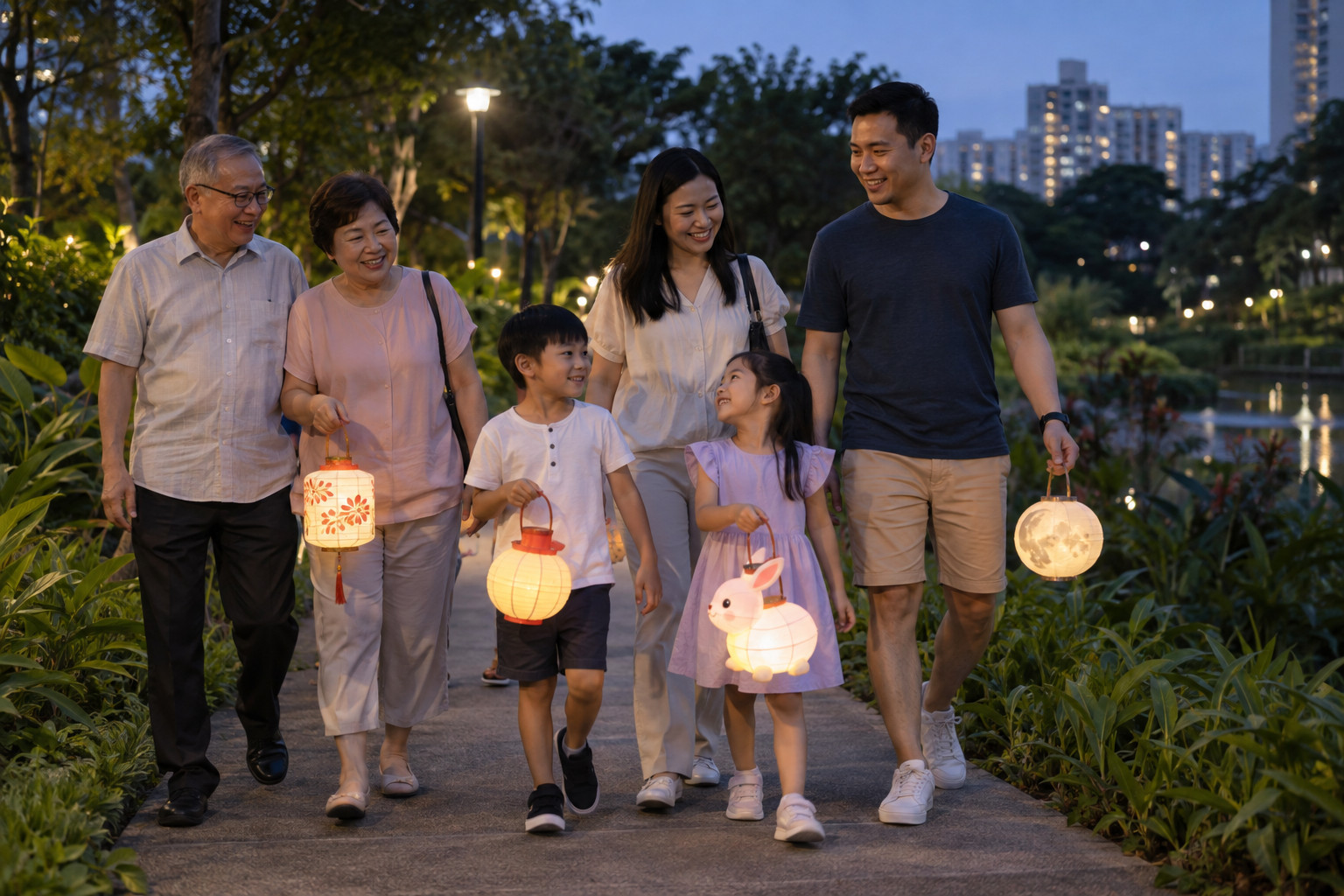
Lanterns transform the night into a shared visual experience. Older handmade lanterns used paper stretched over frames and candles as their light source. Battery-powered designs are now common, offering greater convenience and reducing some fire risks. Public installations can expand the idea dramatically, using large illuminated structures to tell stories or reinterpret cultural motifs.
For children, carrying a lantern makes the festival active rather than merely observed. A walk becomes a procession, and a familiar neighbourhood becomes temporarily magical. For adults, lanterns often evoke childhood memories: the shape of a star or animal, the smell of candles, or the anxiety of protecting a fragile paper lantern from wind and rain.
Safety should remain part of the experience. Open flames require close supervision and may not be permitted at many venues. Reusable electric lanterns are generally better suited to crowded public spaces. Visitors should also respect route restrictions, plants, installations and other guests rather than treating every illuminated area as an unrestricted photo set.
The festival in Singapore
Singapore’s Mid-Autumn celebrations reflect both Chinese cultural inheritance and the country’s dense, multicultural urban setting. Celebrations have historically been associated with Chinatown, community spaces and major attractions. Contemporary programmes may include lantern installations, performances, craft activities, food stalls and storytelling, while families continue quieter observances at home.
The result is not one single Singapore celebration but several overlapping ones. A family meal, a residents’ committee event, a temple observance, a shopping district display and a large garden installation can all belong to the same festival without serving the same purpose. A useful guide should therefore distinguish cultural context from commercial promotion and confirmed programmes from familiar annual expectations.
At the time of writing, official 2026 programme details for major celebrations at Gardens by the Bay and Chinatown had not been confirmed. Both locations have hosted Mid-Autumn activities in previous years, but visitors should not assume that earlier dates, opening hours, admission conditions or installations will return unchanged. Check the organiser’s latest announcement before making a special journey.
The same care is useful when consulting online maps and event guides. Listings may be carried over from an earlier year or may point only to a general area. Confirm the exact entrance, operating hours and access conditions with the organiser, especially when travelling with children, older relatives or anyone who needs step-free access.
Planning with up-to-date information
Cultural stories about Chang’e, mooncakes and lanterns can be enjoyed throughout the year, but programme information changes quickly. Weather, crowd-control measures, performance times and temporary closures can all affect a visit. Use recent organiser announcements rather than an undated event listing or a guide from a previous year.
Before leaving home, check the venue, date, opening hours, admission requirements and last-entry time. If registration is needed, confirm that every member of the group has the correct booking. Families may also wish to check public transport options, sheltered areas and whether lanterns or outside food are permitted.
Clear, current information makes the celebration more enjoyable. When details are still unconfirmed, it is better to keep plans flexible than to treat an expected programme as certain.
Exploring beyond the article
There is more than one way to enjoy Mid-Autumn Festival. Share a mooncake, ask someone which version of the Chang’e story they grew up with, or take a moment to look at the moon together. A simple walk with a lantern can be as memorable as a large public celebration.
For a closer look at how the festival developed across the centuries, read The Mid-Autumn Festival: A Journey Through History.
If you’re heading to Gardens by the Bay, use the guide below to recognise permanent landmarks such as Supertree Grove, Flower Dome and Cloud Forest. They are useful places to orient yourself, but they do not indicate confirmed 2026 festival displays. Check the organiser’s latest announcements for any special installations, timings and entry details before you go.
You can browse the landmarks and open directions without sharing your location. If you choose to enable location, the guide can show approximate distances from you; the choice is yours.
Celebrating thoughtfully in 2026
For families, the most meaningful plan may be simple: choose a place to gather, prepare or share a modest selection of food, carry reusable lanterns and make time for the stories behind the symbols. For visitors attending a public programme, confirm details from the organiser on the day, expect crowds and weather changes, and use public transport guidance provided by the venue.
For parents and educators, the festival offers an opportunity to compare stories rather than merely repeat them. Ask children what “reunion” means when relatives live far away, why a round shape appears so often, or how a lantern can be redesigned to produce less waste. These questions connect tradition to lived experience.
For anyone celebrating alone or away from family, the festival’s imagery can still offer connection. The moon does not eliminate distance, but it provides a shared reference across it. That may be the festival’s most durable idea: people in different places can look toward the same object and remember that separation is not the same as disconnection.
On 25 September 2026, Singapore’s public programmes may take many forms, but the centre of the festival remains remarkably portable. It fits into a mooncake cut into careful portions, a lantern carried after dark, a story told differently by each generation and a moment spent looking at the moon together.
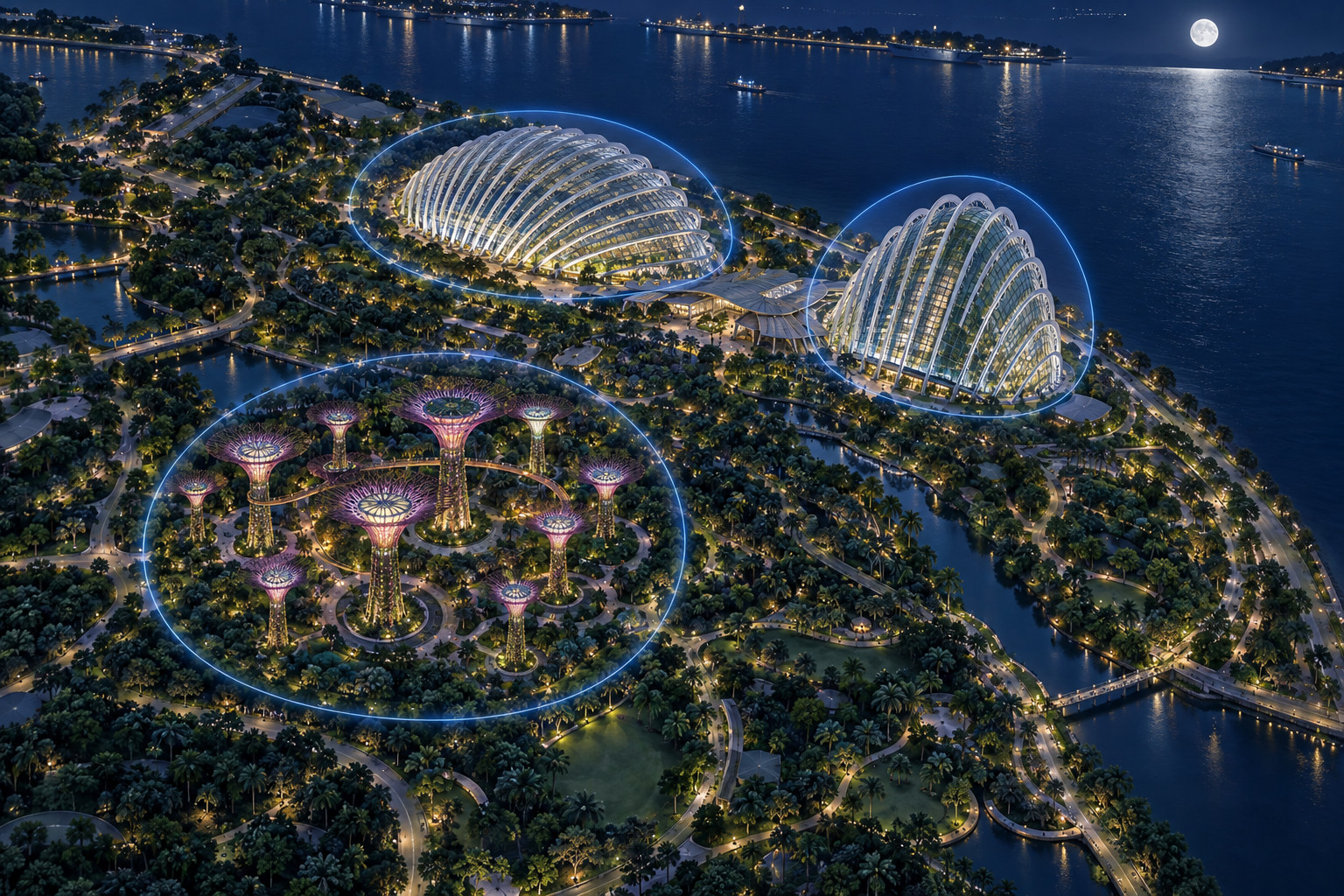
Mid-Autumn Garden Explorer
Explore permanent Gardens by the Bay landmarks while waiting for the official 2026 Mid-Autumn display map. Blue markers are navigation references—not confirmed festival installations.
Location is off. You can still browse every landmark.
Supertree Grove
A prominent meeting point and orientation landmark.
Flower Dome
A recognised conservatory on the waterfront side of the Gardens.
Cloud Forest
A prominent conservatory beside Flower Dome.
Floral Fantasy
A named attraction useful for navigating the southern garden area.
Active Garden
A public garden area and useful southern orientation point.
Bayfront Plaza
An arrival-area reference when approaching from Bayfront.
Sources
Mid-Autumn Festival Singapore 2026
Explore points connected to this story.
Location is off. You can still browse every point.



Leave a Reply