
Published: 23 July 2026
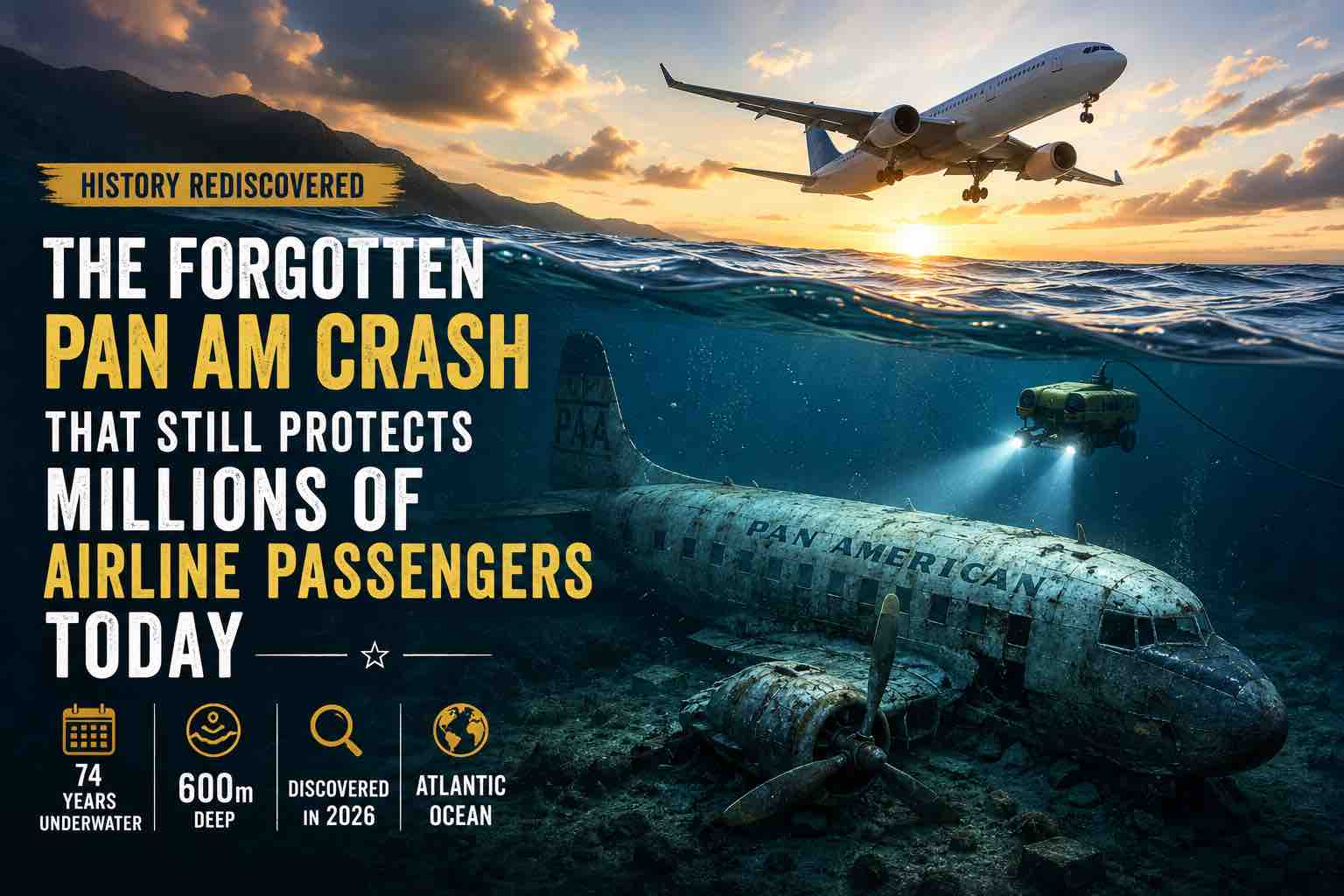
The discovery of a Pan American World Airways aircraft 74 years after it disappeared beneath the Atlantic Ocean is more than an archaeological milestone. It is a reminder that aviation safety is built on decades of hard-earned lessons, many of which continue to protect millions of passengers every day.
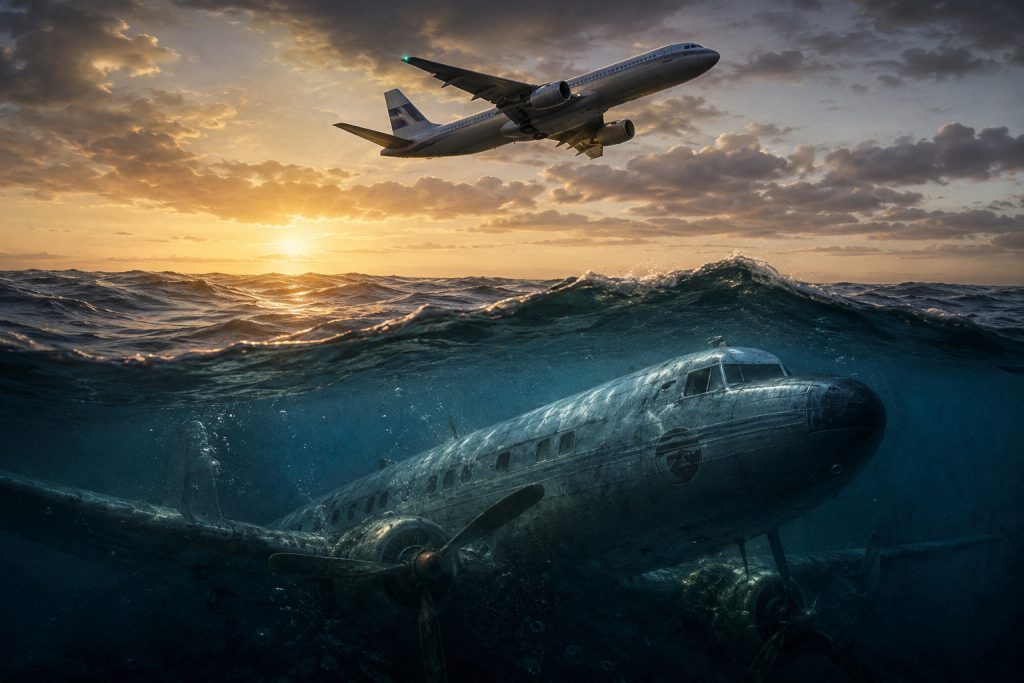
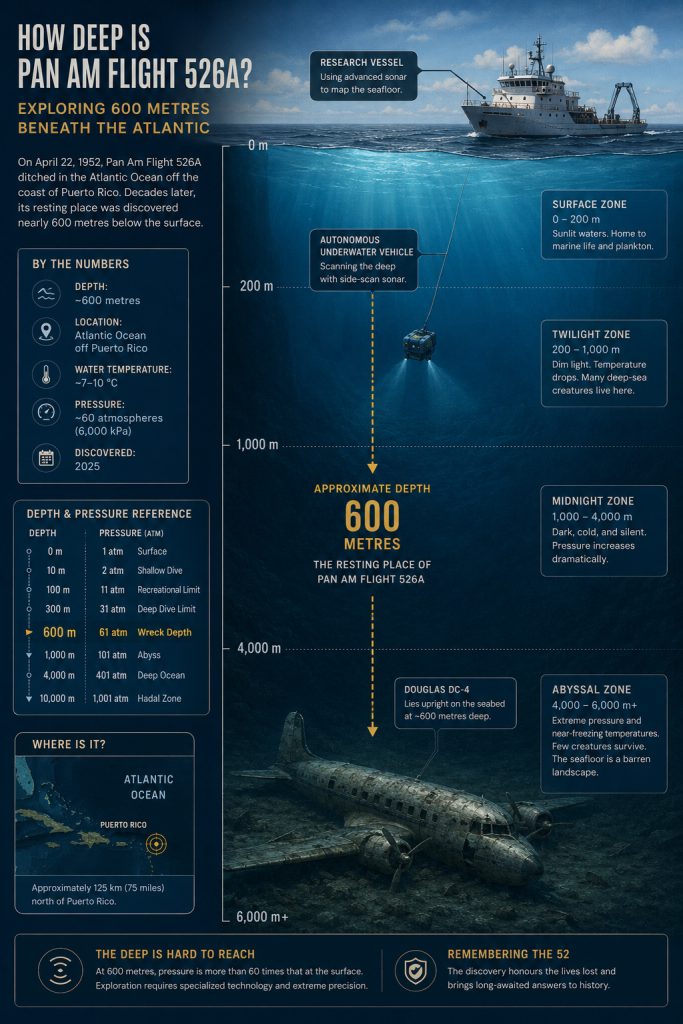
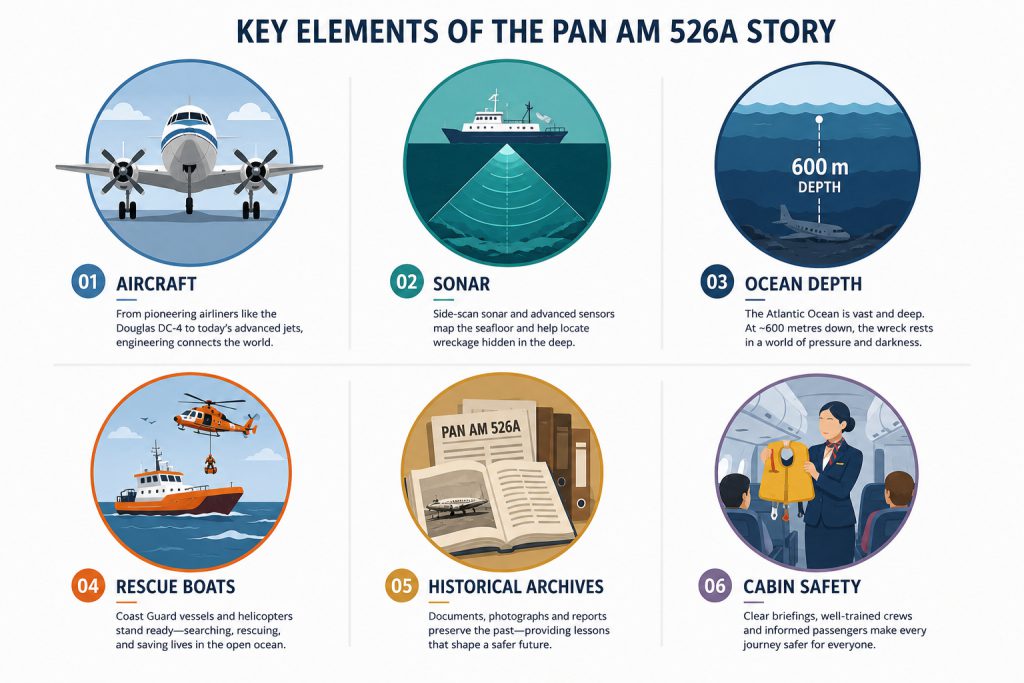
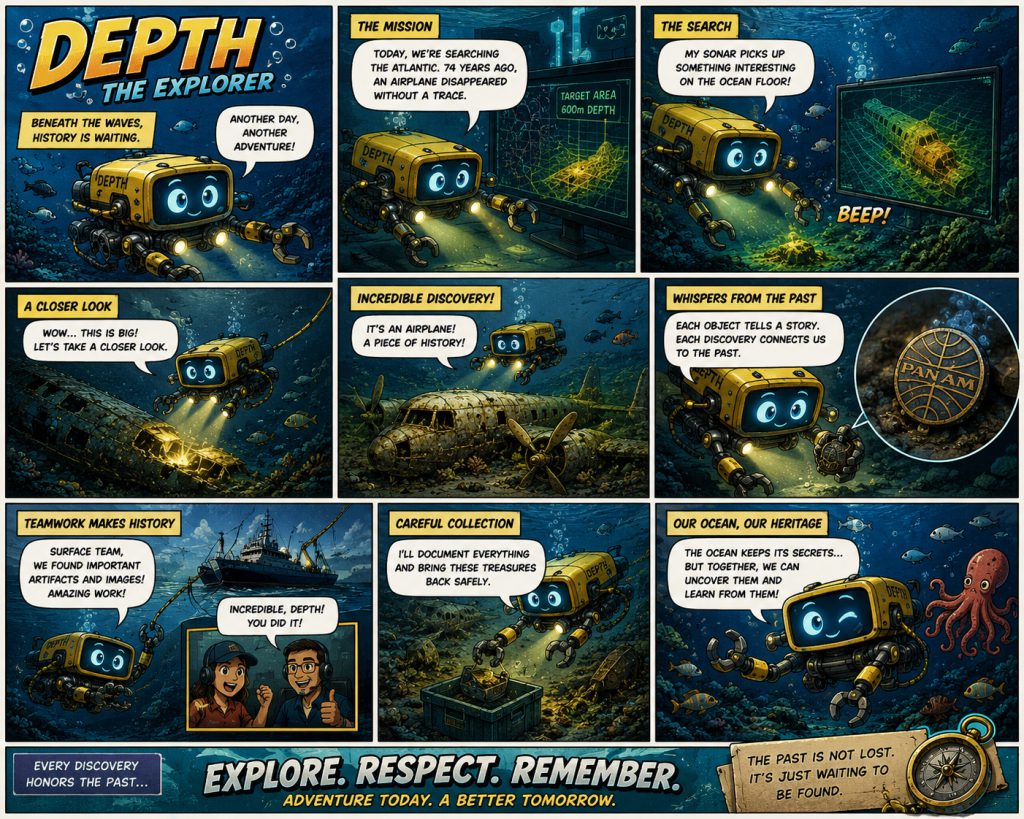
More than seven decades after Pan American World Airways Flight 526A disappeared beneath the waters off Puerto Rico, researchers have located the remains of the Douglas DC-4 Clipper Endeavor approximately 600 metres below the Atlantic Ocean.
The discovery was announced in July 2026 by the Air/Sea Heritage Foundation following a multi-year search conducted with Deep Sea Vision and documented as part of Expedition Unknown.
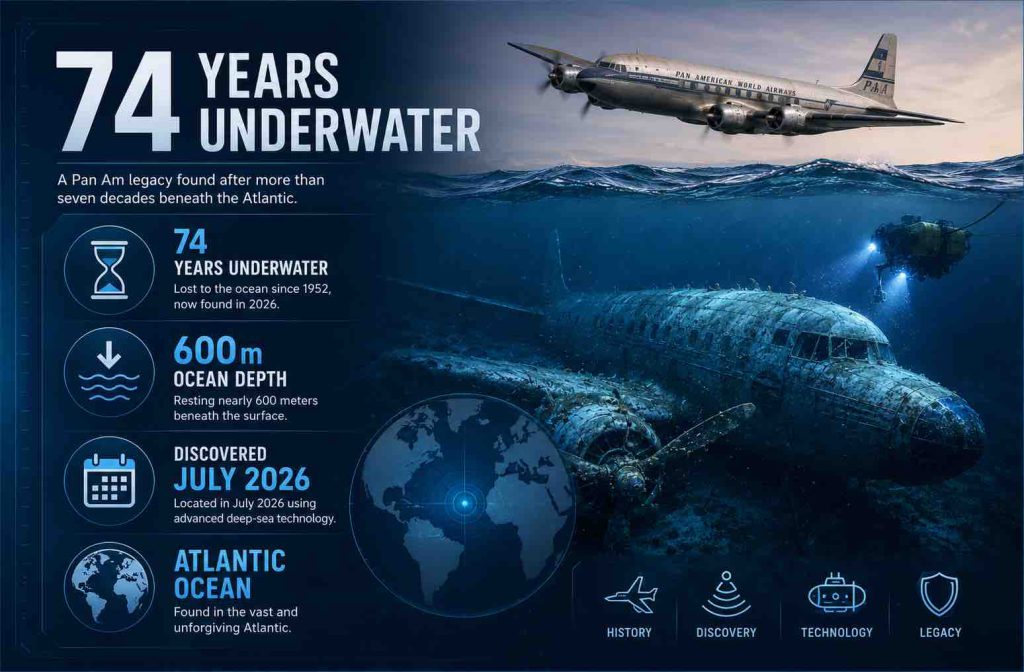
Although the aircraft has rested silently on the seabed since April 1952, its historical significance has never disappeared.
The accident is regarded as one of several influential post-war commercial aviation accidents whose investigations contributed to the continuing evolution of passenger safety procedures, emergency preparedness and cabin crew training. Those lessons continue to influence modern commercial aviation.
A Discovery 74 Years in the Making
Finding an aircraft on the ocean floor is rarely as simple as knowing where it disappeared.
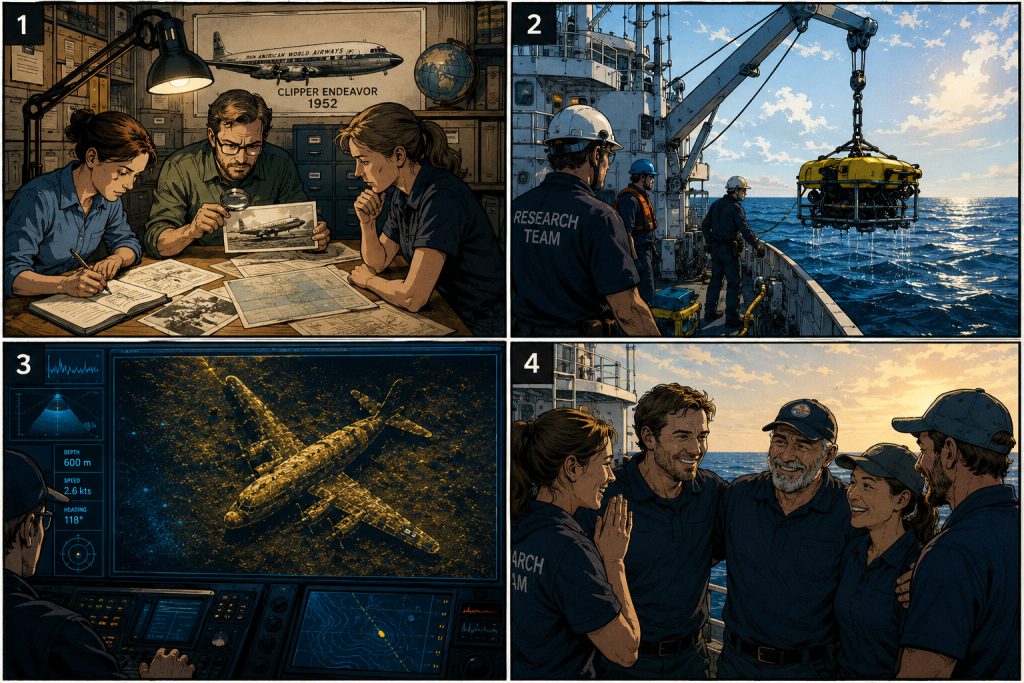
Researchers spent years examining:
- Historical Coast Guard reports
- Navigation records
- Contemporary weather observations
- Witness statements
- Ocean drift analysis
- Historic flight documentation
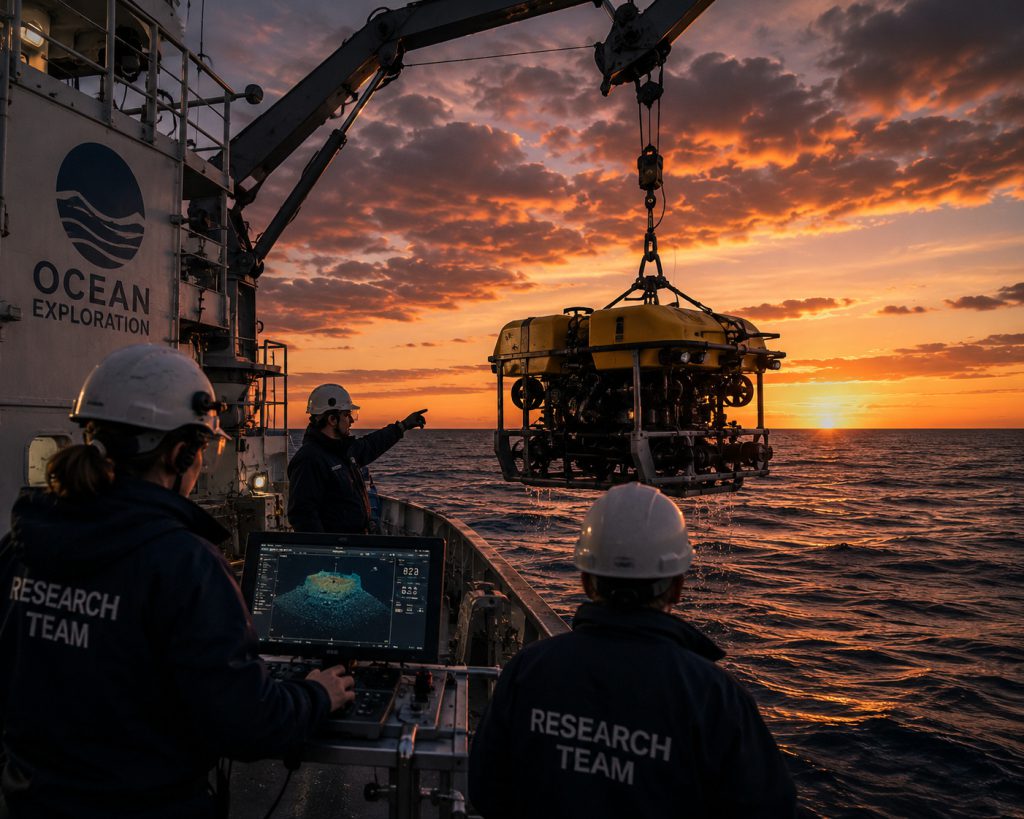
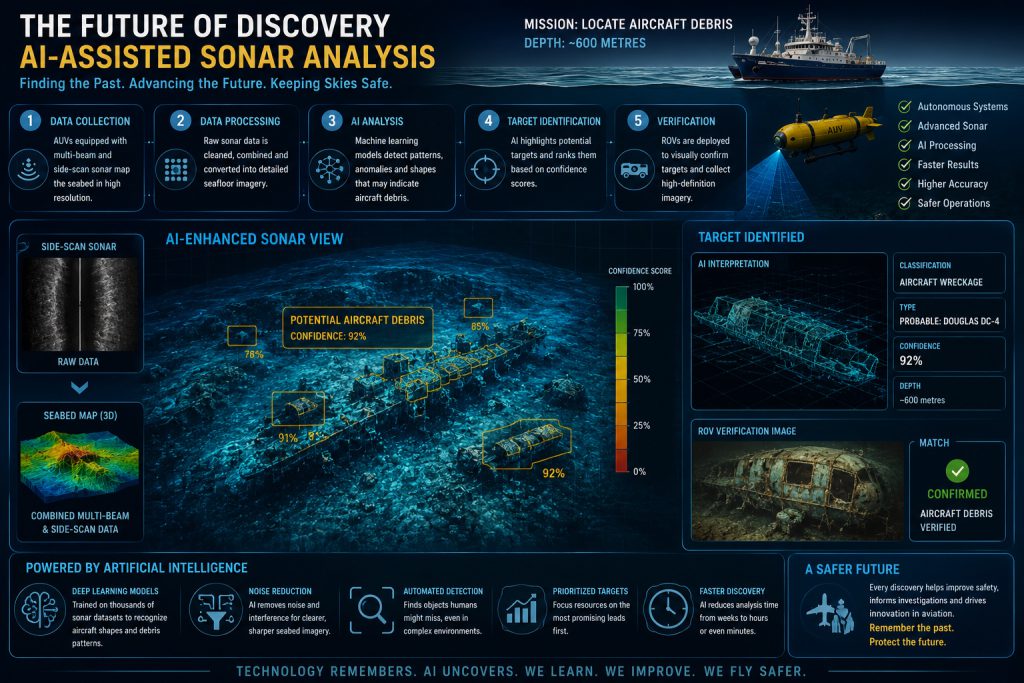
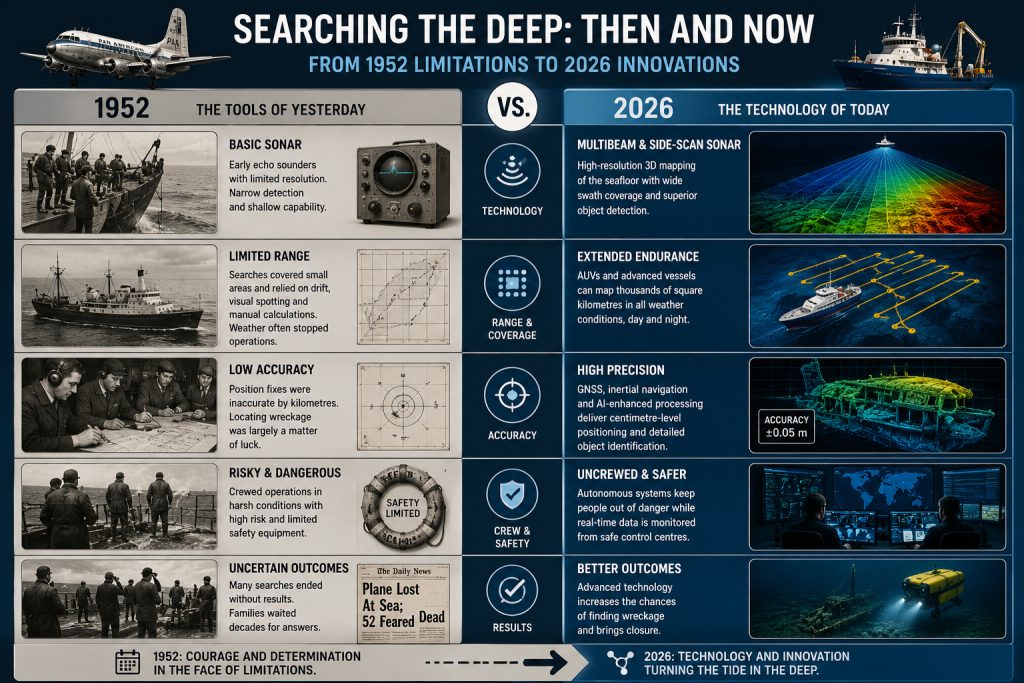
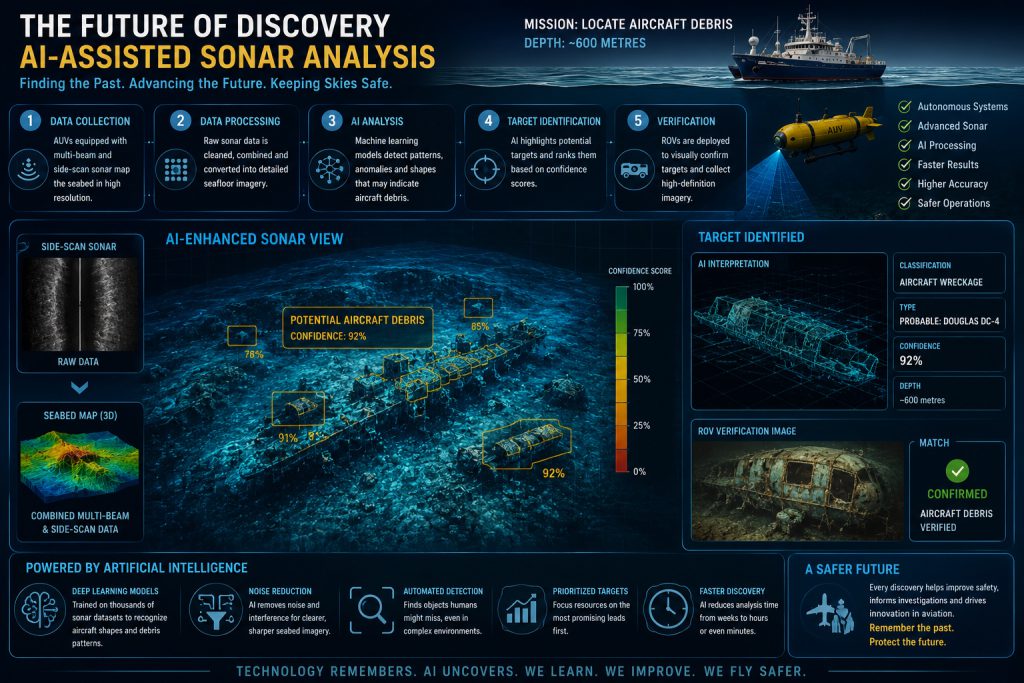
Only after narrowing the likely search area did an autonomous underwater vehicle equipped with high-resolution side-scan sonar begin surveying the seabed.
The aircraft was subsequently identified resting in two major sections.
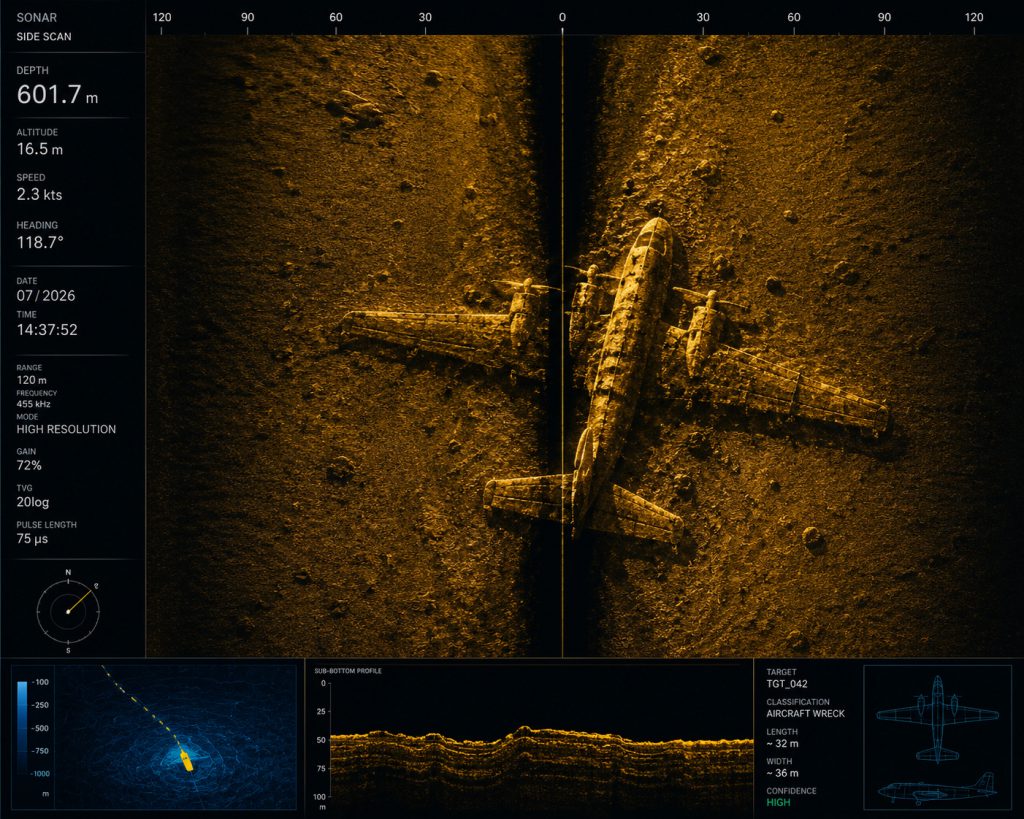
Visible characteristics included:
- Pan American markings
- Engines
- Landing gear
- Fuselage structure
For aviation historians, the discovery confirms the final resting place of one of the most significant commercial aviation accidents of the early 1950s.
The Flight That Never Reached New York
On 11 April 1952, Pan Am Flight 526A departed San Juan, Puerto Rico, for New York City.
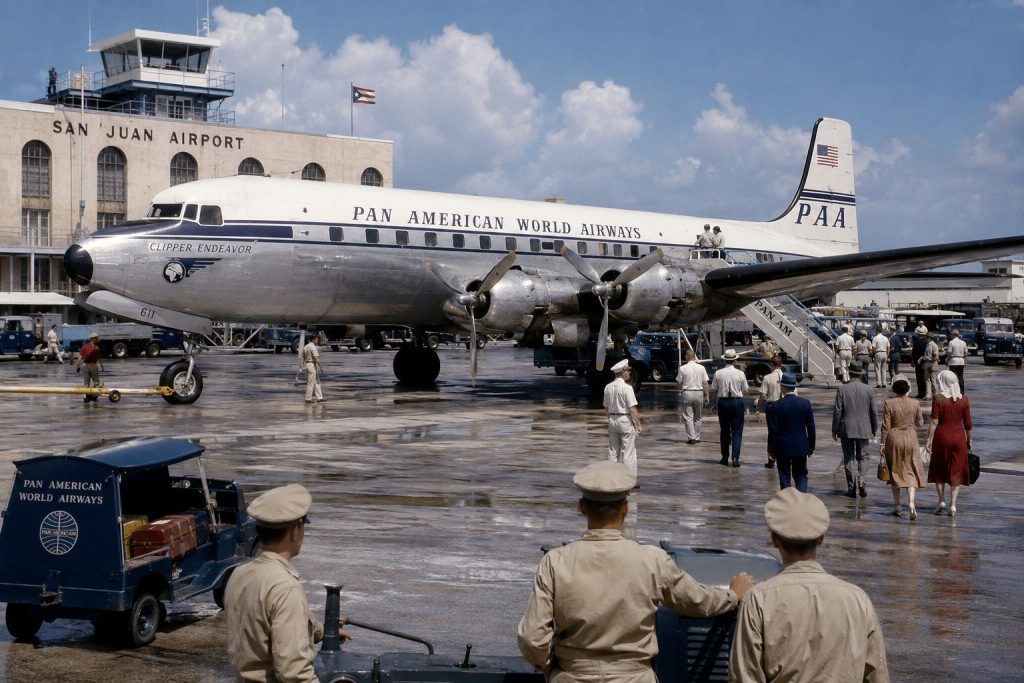
Shortly after take-off, the aircraft experienced serious power loss affecting the two engines on its right wing.
Unable to continue safely, the flight crew elected to perform an emergency ditching in the Atlantic Ocean.
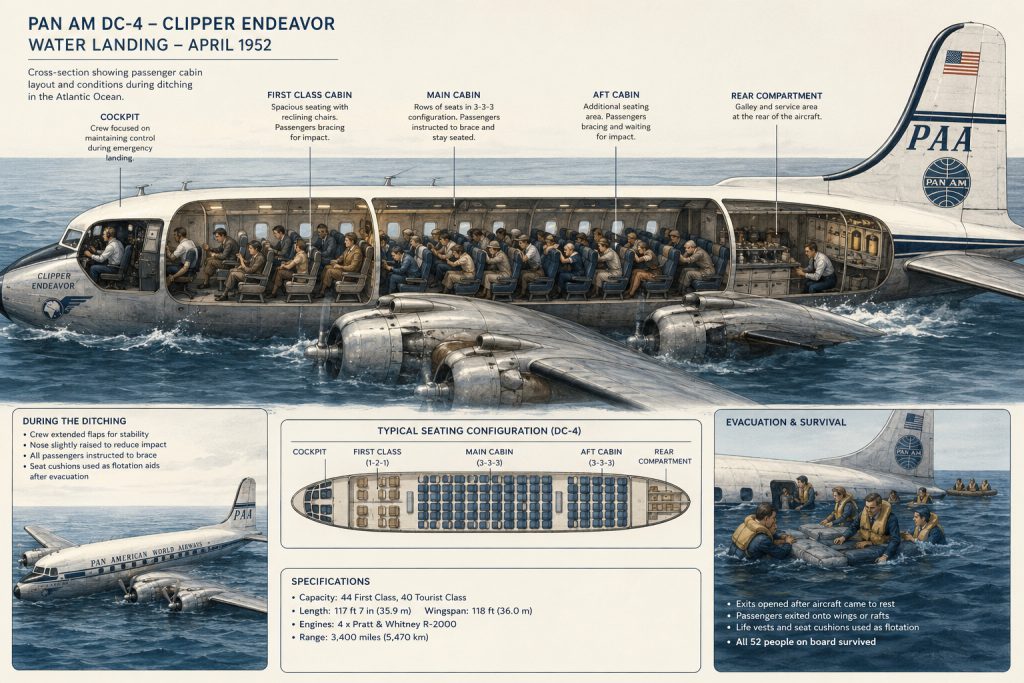
Historical accounts indicate the ditching itself was remarkably well executed, allowing many occupants to survive the initial impact.
However, the aircraft rapidly flooded after landing on the water.
Despite rescue efforts by the United States Coast Guard and other responders, 52 people ultimately lost their lives, while 17 survived.
The accident highlighted that surviving an emergency landing was only one part of a successful evacuation.
How One Investigation Helped Shape Modern Aviation Safety
The rediscovery of the aircraft is historically important not simply because the wreck has been found, but because of what investigators learned after the accident.
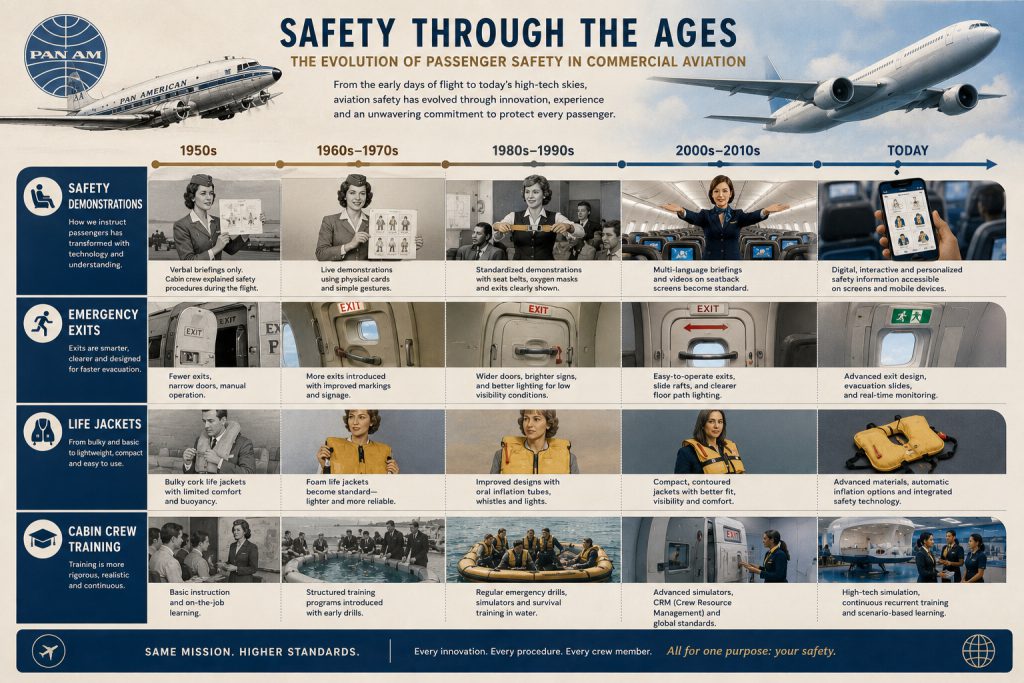
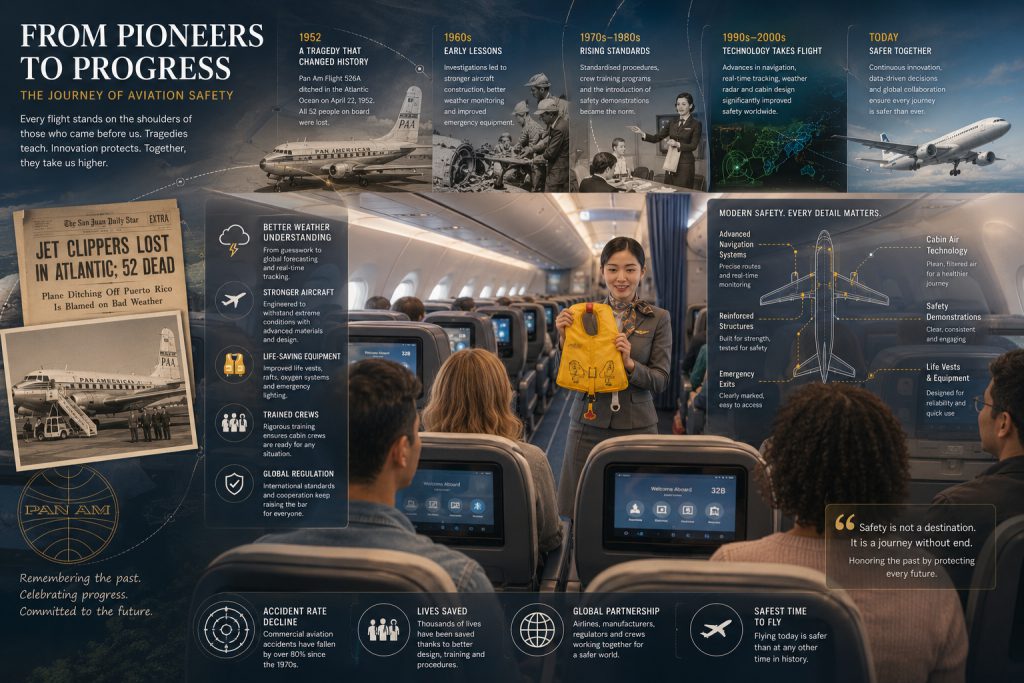
Flight 526A was among several influential aviation accidents whose investigations contributed to the ongoing development of:
- Passenger safety briefings before departure
- Standardised life jacket demonstrations
- Emergency evacuation procedures
- Cabin crew emergency training
- Improved flotation equipment
- Greater emphasis on passenger preparedness during emergencies
Modern aviation safety standards evolved through decades of investigations involving numerous accidents around the world. Flight 526A forms part of that broader history rather than standing alone as the sole catalyst.
Today, every passenger who is asked to locate the nearest emergency exit or pay attention to a safety demonstration is benefiting from knowledge accumulated through generations of aviation safety investigations.

Why Was the Aircraft Missing for 74 Years?
Although investigators knew the approximate ditching area, locating the aircraft remained extremely challenging.
Several factors contributed.
Deep Ocean Environment
The wreck lies hundreds of metres beneath the Atlantic Ocean, far beyond the capabilities of 1950s search technology.
Limited Technology
Modern autonomous underwater vehicles and high-resolution sonar simply did not exist when the accident occurred.
Ocean Drift
Aircraft rarely sink directly beneath their final position on the water surface. Currents, wind and underwater terrain complicate searches considerably.
Vast Search Areas
Even a search area considered relatively small can require years of preparation and specialist equipment.
Only in recent decades has underwater mapping technology become capable of locating aircraft wrecks with this level of precision.
Why This Discovery Matters Today
Many readers may wonder why the discovery of a 74-year-old aircraft deserves attention.
The answer is simple.
Commercial aviation has one of the strongest safety cultures of any industry because investigators carefully study accidents and share those lessons worldwide.
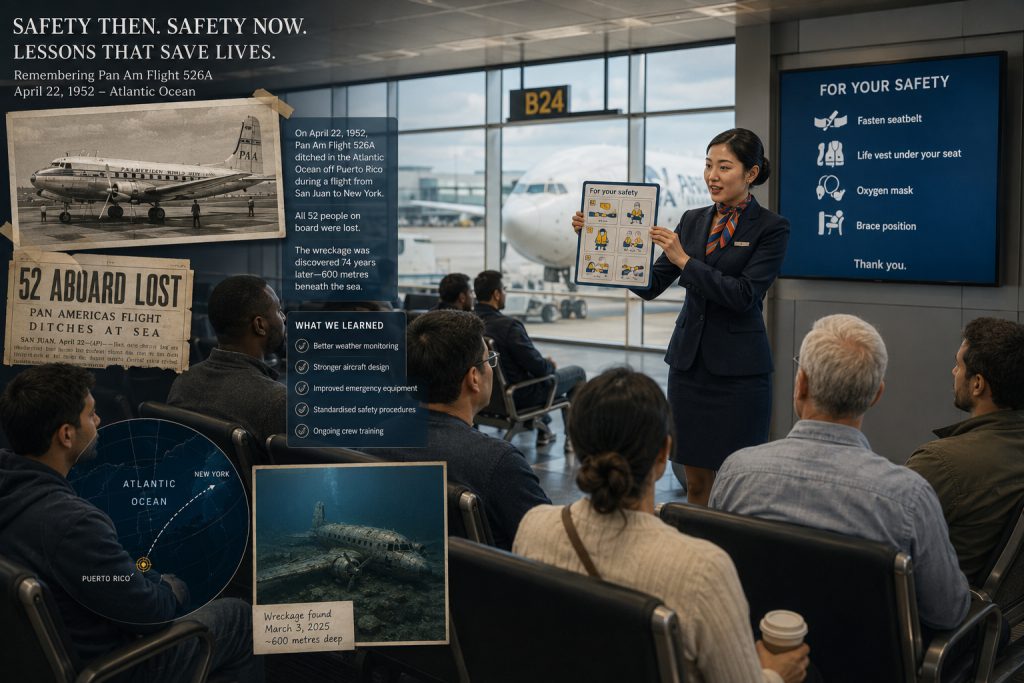
This discovery reminds us that history continues shaping everyday travel.
Every commercial flight today benefits from decades of accumulated knowledge, improved engineering, refined procedures and international cooperation.
Did You Know?
- Everyone on board is believed to have survived the initial ditching before the situation deteriorated as the aircraft flooded.
- The wreck rested approximately 600 metres beneath the Atlantic Ocean.
- Researchers combined archival records with modern autonomous underwater vehicles to locate the aircraft.
- The discovery required years of historical research before the sonar search even began.
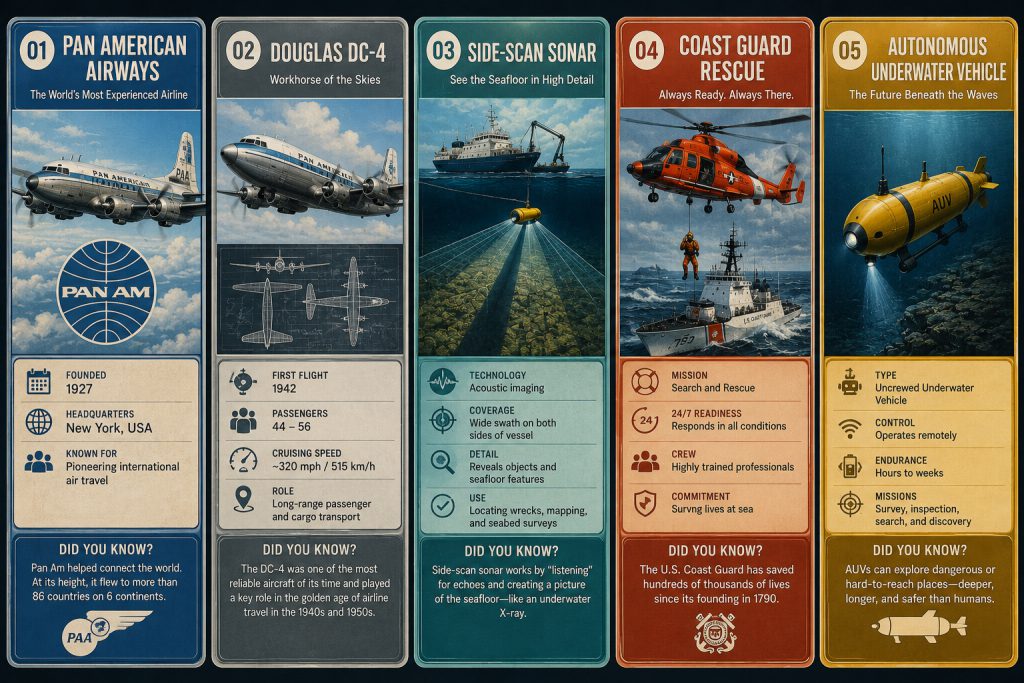
- Pan American World Airways was once among the world’s most recognised international airlines and played a major role in the expansion of global air travel.
Could Modern Technology Solve Other Aviation Mysteries?
Whenever a historic aircraft is located, comparisons naturally arise with other missing aircraft such as Malaysia Airlines Flight MH370.
However, each search presents unique challenges.
Flight 526A disappeared within a relatively well-defined area shortly after take-off.
By contrast, MH370’s final location remains uncertain across an enormous section of the southern Indian Ocean.
Nevertheless, advances in:
- Autonomous underwater vehicles
- Side-scan sonar
- Deep-ocean mapping
- Digital reconstruction
- Image analysis
continue improving the ability of researchers to investigate historical mysteries beneath the sea.
Technology Is Rewriting History
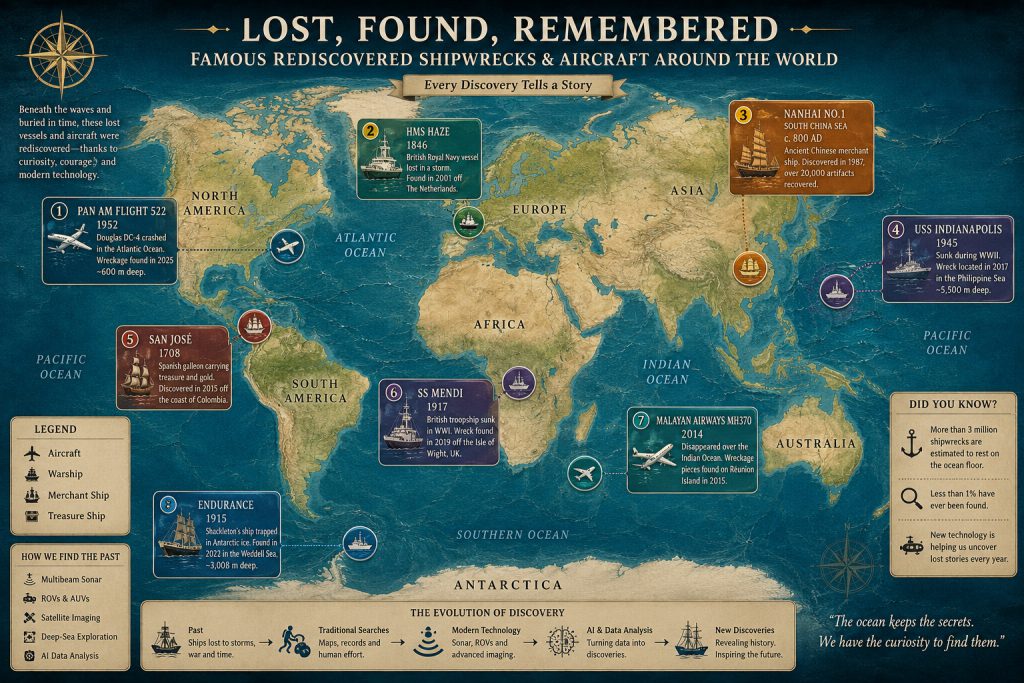
Modern underwater archaeology is transforming our understanding of the past.
Shipwrecks, aircraft and submerged cultural sites that were once considered permanently lost are increasingly being rediscovered using sophisticated marine technology.
Each discovery not only answers historical questions but also preserves stories for future generations.
Timeline
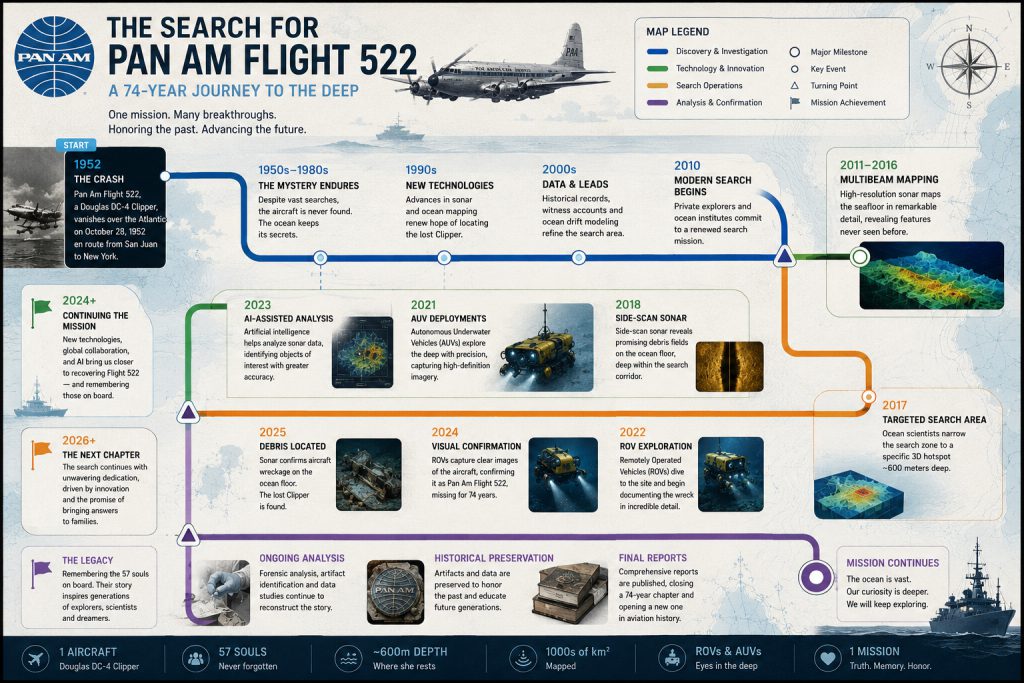
| Year | Event |
|---|---|
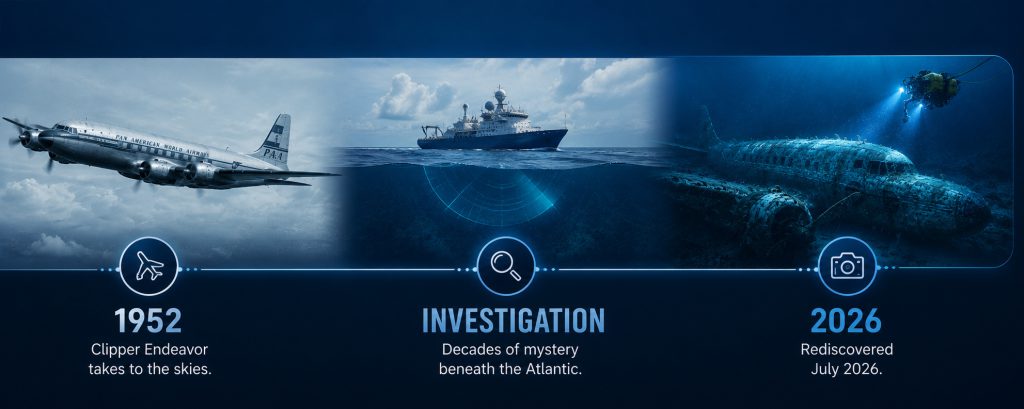
| 11 April 1952 | Pan Am Flight 526A departs San Juan before ditching in the Atlantic Ocean. |
| 1952 | Investigation examines the accident and contributes to broader commercial aviation safety improvements. |
| 2019 | Researchers begin renewed historical research and search planning. |
| June 2026 | Autonomous underwater vehicle locates the wreck using side-scan sonar. |
| July 2026 | Air/Sea Heritage Foundation publicly announces the discovery. |
Why This Story Deserves to Be Remembered
The rediscovery of Pan Am Flight 526A closes an important historical chapter.
More importantly, it reminds us that transportation safety is built upon continuous learning.
Every accident investigation contributes another piece to a much larger body of knowledge that has made commercial aviation one of the safest forms of travel.
Although the aircraft remained hidden beneath the Atlantic for 74 years, the lessons associated with its story have continued travelling the world every single day.

Why This Matters Today
Instead of viewing this discovery as simply another historical curiosity, it offers a broader perspective.
It reminds us that:
- Safety procedures often have real historical origins.
- Engineering improvements frequently arise from detailed investigations.
- Modern search technology continues solving long-standing historical mysteries.
- Preserving aviation history helps future generations understand how safety evolves.
The aircraft may have disappeared beneath the ocean, but its story continues contributing to public understanding of aviation history.




Leave a Reply