
🚀 Artemis II — The Mission That Brings Humans Back to Deep Space
Support Us! 🎥 Artemis II Live / Deep Space Signal Watch the Artemis II mission coverage and live deep-space updates. Video source:...
Read MoreNot your neighborhood? Click here to explore others or signin
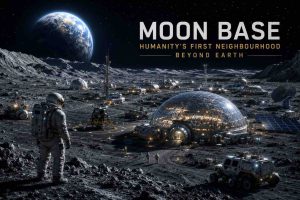
For decades, the Moon existed mostly as memory — a distant white surface hanging quietly above cities, oceans, highways, apartment blocks, airports, and sleeping neighborhoods across Earth.
For some, it was childhood imagination.
For others, it was old Apollo footage replayed endlessly through documentaries and history lessons.
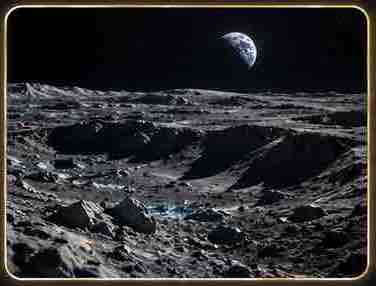
Recently, however, something changed in the language surrounding the Moon.
NASA’s latest Moon Base briefing no longer described lunar exploration purely as a temporary mission. Instead, the discussion shifted toward infrastructure, mobility systems, surface logistics, communications networks, power systems, and eventually sustained human presence.
The Moon is beginning to sound less like a destination and more like a place people may someday live and work.
Quietly, almost without the world fully noticing, humanity may have started planning its first neighbourhood beyond Earth.
One of the strongest ideas repeated throughout the NASA briefing was the importance of taking an iterative approach rather than immediately attempting a giant science-fiction-style lunar city.
The agency repeatedly emphasized that humanity still knows very little operationally about surviving long-term on the Moon.
NASA leaders explained that the combined astronaut EVA time across all Apollo lunar missions totaled only around 80 hours.
Despite Apollo’s historical significance, modern lunar operations remain largely untested territory.
This reality shapes the philosophy behind the Moon Base initiative.
Instead of building everything at once, NASA intends to begin with robotic landers, autonomous rovers, scouting drones, communications systems, and technology demonstrations.
Over time, these systems may evolve into mobility corridors, logistics networks, power infrastructure, and longer-duration habitation capabilities.
The Moon itself remains both beautiful and hostile.
Surface temperatures can swing dramatically between extreme heat and deadly cold.
Radiation exposure presents continuous risk, while meteorite impacts and terrain uncertainty add further operational challenges.
NASA repeatedly referred to this effort as “the science of survival,” a phrase that may ultimately define the early era of lunar habitation.
The Moon Base strategy focuses heavily on the lunar South Pole because scientists believe the region may contain some of the most valuable operational and scientific conditions on the Moon.
Permanently shadowed craters may preserve water ice that has remained untouched for millions or even billions of years.
Water changes the entire equation for long-term lunar presence.
Beyond drinking water, it could potentially support oxygen production, fuel generation, life-support systems, and future sustainability efforts.
Nearby elevated ridges may also receive long periods of sunlight, making them attractive for solar power generation.
NASA’s descriptions of future lunar infrastructure increasingly resemble distributed urban planning rather than a single isolated outpost.
Habitats, communications systems, science zones, power infrastructure, mobility routes, and landing areas may eventually spread across large sections of the lunar surface depending on terrain and operational needs.
The Moon is no longer being imagined simply as an object in the sky.
It is beginning to be understood geographically.
NASA outlined several major missions connected to the Moon Base initiative during the briefing.
Each mission plays a role in gradually building operational knowledge and reducing risk for future human activity on the lunar surface.
Blue Origin’s Mark 1 Endurance lander is expected to deliver science payloads to the Shackleton Connecting Ridge region near the lunar South Pole.
NASA described this mission as important for reducing risk ahead of future crewed lunar missions.
Astrobotic’s Griffin lander is expected to carry over 500 kilograms of cargo, including Astrolab rover systems designed to support logistics, mobility, and autonomous surface operations.
The Lunar Vertex mission will study mysterious lunar swirls — unusual bright formations on the lunar surface that may reveal how solar wind interacts with surface materials.
NASA also referenced international cooperation through payload participation from other space agencies.
One of the most fascinating ideas presented during the briefing involved “Moonfall” drones.
These robotic systems may scout terrain, analyze radiation conditions, map landing regions, search for water ice, establish navigation frameworks, and potentially survive harsh lunar nights.
NASA suggested that future drone positions could eventually become permanent operational points, navigation references, or communication beacons supporting broader Moon Base infrastructure.
Humanity is beginning to discuss the Moon using the language of geography, infrastructure, and operational planning rather than pure imagination.
NASA discussed distances between landing areas, rover travel corridors, communication coverage zones, resource prospecting regions, and distributed operational systems.
Future lunar infrastructure may span hundreds of square miles depending on terrain, science objectives, energy requirements, and safety considerations.
Habitats may remain on elevated ridges with sunlight access while power systems could sit kilometers away for operational safety.
Scientific sites may spread across crater systems while autonomous vehicles continuously move between exploration areas.
The Moon is slowly transforming from a symbol into operational environment.
Throughout the briefing, NASA repeatedly linked the Moon Base initiative to future missions to Mars.
The agency views the Moon as a nearby testing ground where humans can learn survival skills, logistics systems, mobility operations, and infrastructure management before attempting much longer interplanetary missions.
Compared to Mars, the Moon remains operationally close to Earth, allowing faster recovery, faster adaptation, and quicker technological iteration.
NASA leadership openly stated that many lunar systems being developed today are ultimately intended to prepare humanity for Mars exploration.
In this sense, the Moon Base may not represent the final destination at all.
It may simply be the first operational chapter in humanity’s expansion deeper into space.
Previous exploration eras often began with maps and ships crossing oceans.
This new era may begin with autonomous systems, orbital observation networks, robotic logistics, digital terrain mapping, distributed infrastructure, and mobility systems operating across another world.
The Moon Base initiative reflects something larger than technology alone.
It represents a gradual shift in how humanity imagines its future — not simply reaching another world, but learning how to remain there carefully, sustainably, and permanently.
The Moon still hangs silently above Earth every night, but increasingly it no longer feels unreachable.
It feels like the edge of the next neighbourhood humanity is preparing to discover.
Booking is not available for this GoXpot.
❓ Require more info? Search directly on web here!
Discover places by energy, mood, and real-world character.
Leave a Reply