
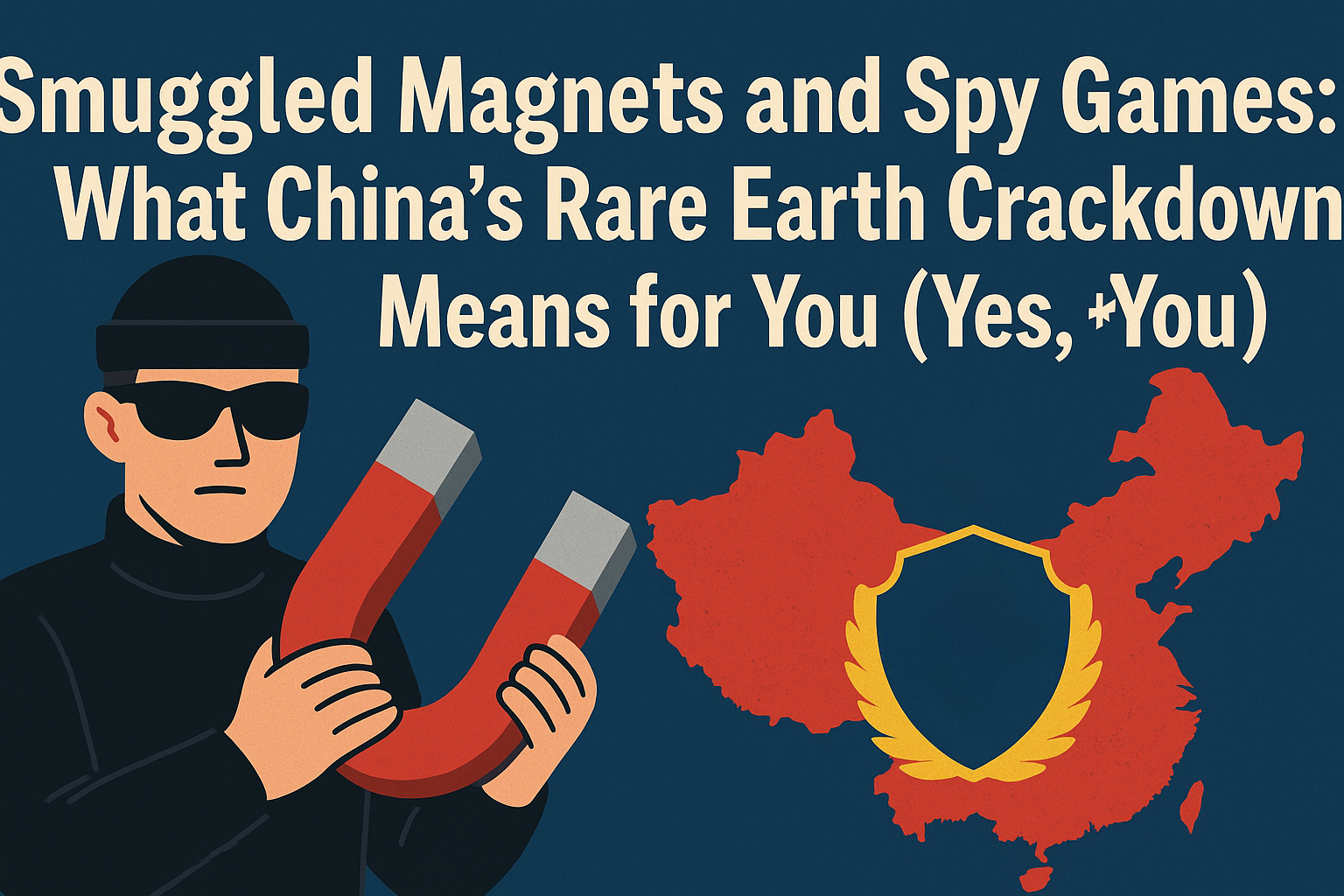
💡 Wait… People Smuggle Magnets Now?
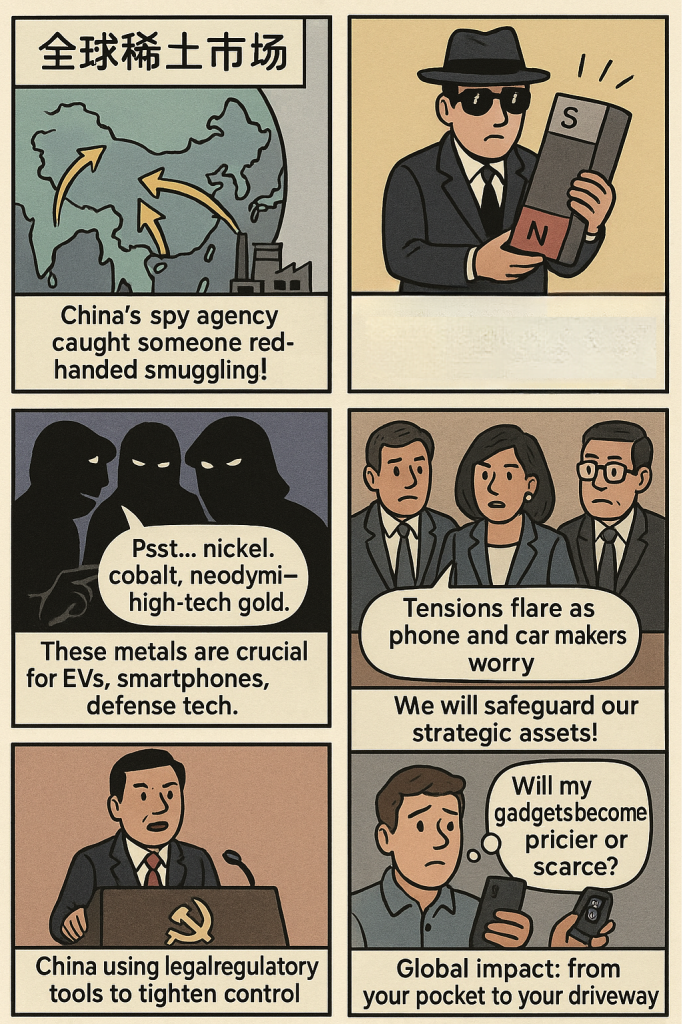
You read that right. We’ve all heard of dramatic spy stories — secret dossiers, shadowy briefcases, rooftop chases — but this week, China’s Ministry of State Security took center stage with a very 2025 twist: catching someone smuggling powerful magnets. Not your average fridge souvenir, mind you, but rare earth magnets — the kind used in everything from your smartphone to electric vehicles and advanced military gear.
I don’t know about you, but I never imagined the quiet heroes of tech—little chunks of neodymium or cobalt—would one day headline global espionage drama.
🧲 What’s the Big Deal About Rare Earths?
Let’s break it down. Rare earth materials are like the unsung ingredients in your favorite recipe. No one raves about the salt in chocolate chip cookies, but without it, something’s missing.
In tech, these metals make everything tick. Literally. They’re in:
- Electric vehicle motors 🛞
- Wind turbines 🌬️
- Fighter jet sensors ✈️
- Your phone’s vibration motor 📱
- Even those noise-canceling headphones you wear to avoid coworkers 👀
China happens to control nearly 90% of the world’s processing of rare earths. So when they start sounding the alarm about smuggling, the whole world listens — and shudders a little.
🕵️♂️ Espionage Meets Economics
According to reports, China’s spy agency intercepted foreign agents attempting to smuggle out rare earth elements. This isn’t a thriller novel — it’s the real deal.
Behind the drama, the message is clear: China wants tighter control over its rare earths.
And it’s not just for bragging rights — it’s about economic leverage, technological dominance, and national security.
If you’ve ever asked why your electric car’s delivery got delayed or why your next-gen phone is more expensive than expected, here’s part of your answer.
🤔 So… What Does This Mean for Us?
You might be thinking:
“Cool spy story, but I’m just trying to get through the week without breaking my screen again.”
Fair. But here’s why you should care:
- Prices could spike for tech products if the supply chain tightens.
- Innovation could slow if companies can’t access the materials they need.
- Geopolitical tensions might rise, especially between China and countries like the U.S., Japan, and Australia, which are racing to develop alternative supply chains.
Basically, what’s happening today could shape what you’ll be able to buy—or afford—next year.
🤯 My Take? This Is More Than Just Metal
There’s something oddly poetic about this. In a world dominated by apps, cloud servers, and AI, it’s still atoms — not just bits — that hold power. Control over tiny physical elements can shake entire industries.
I used to think rare earths were a boring footnote in tech, the way flour is in cake. But flour is everything, and now we’re all watching the bakery burn.
✅ Takeaway: Stay Curious, Stay Connected
What this rare earth spy story tells us is that even the smallest components matter — in geopolitics, in tech, in life. It’s a reminder that the world is deeply interconnected, and the forces shaping tomorrow’s gadgets or policies may be quietly unfolding today.
So next time your phone buzzes, maybe take a second to wonder:
“How did that tiny magnet get there… and who had to smuggle it?”
💬 What Do You Think?
Do you think countries should rely less on China for rare earths?
Have you seen rising tech costs in your own life?
Drop your thoughts in the comments — let’s make this conversation smarter than the average YouTube rant. 😉
And if you enjoyed this dive into the tech-politics rabbit hole, subscribe to Ngagego.com and your local neighborhood feed to never miss a beat.




Leave a Reply