
From 📍SpotMe — Powered by NgageGo’s neighbourhood engine
Roar, Our Way, this SG60
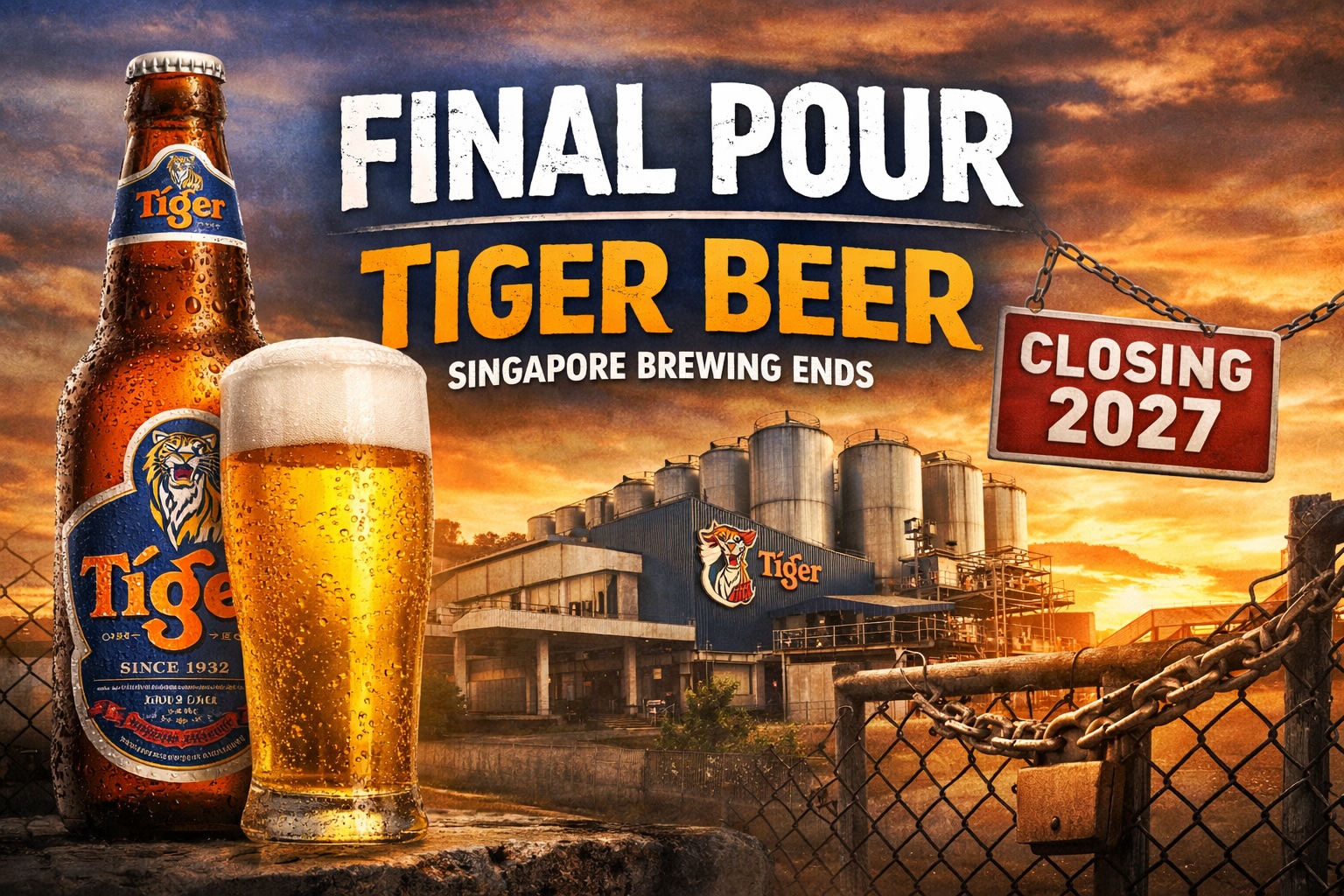
🍺 Tiger Beer’s “Final Pour” in Singapore — What’s Really Changing by 2027?
Overview
For decades, Tiger Beer has been closely tied to Singapore — not just as its birthplace, but as a major production base. That connection is now entering a new phase.
On 24 March 2026, Heineken announced that Asia Pacific Breweries Singapore will shift to an import-led supply model. Singapore will remain Tiger Beer’s global home, but large-scale brewing will gradually be reduced.
This is not a sudden exit. It is a long-term structural transition.
What Is Changing
By the end of 2027, large-scale brewing at the Tuas brewery will be progressively phased down.
Instead of being produced primarily in Singapore, Tiger Beer will increasingly be supplied through overseas breweries within HEINEKEN’s regional network.
At the same time, the Tuas site will not disappear. It is expected to be redeveloped to support logistics operations and a pilot brewery for innovation and experimentation.
What Is Not Changing
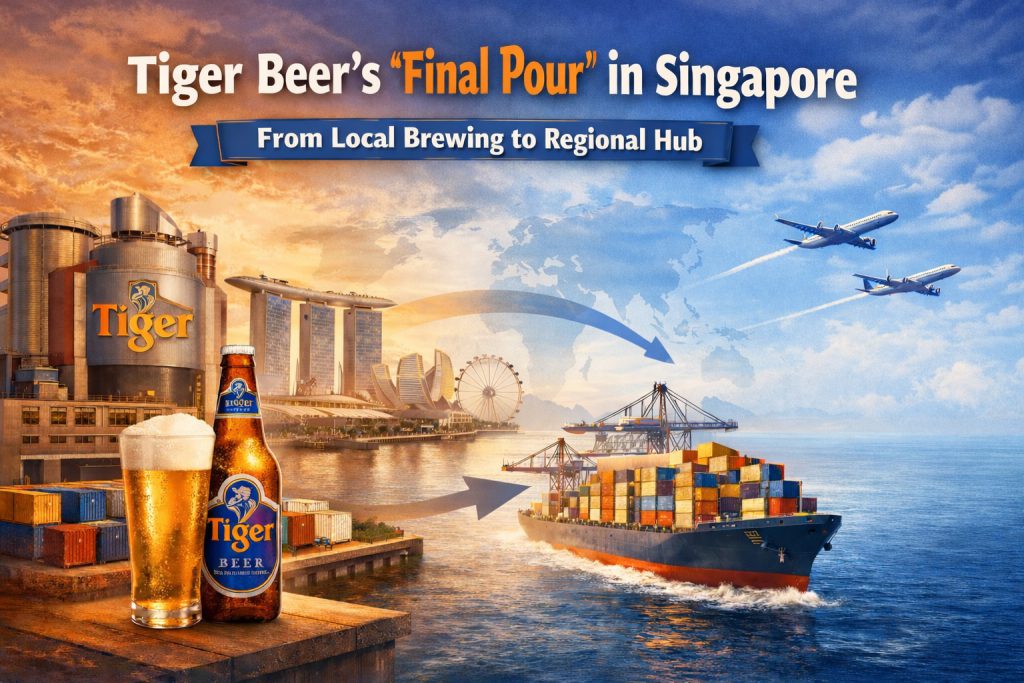
Tiger Beer is not leaving Singapore.
The brand’s identity, strategy, and global positioning will continue to be anchored in Singapore. HEINEKEN has stated that Singapore remains:
- the global brand home of Tiger Beer
- a regional headquarters for Asia Pacific operations
- a centre for innovation, planning, and commercial leadership
This means the role of Singapore is evolving, not shrinking.
Why This Shift Is Happening
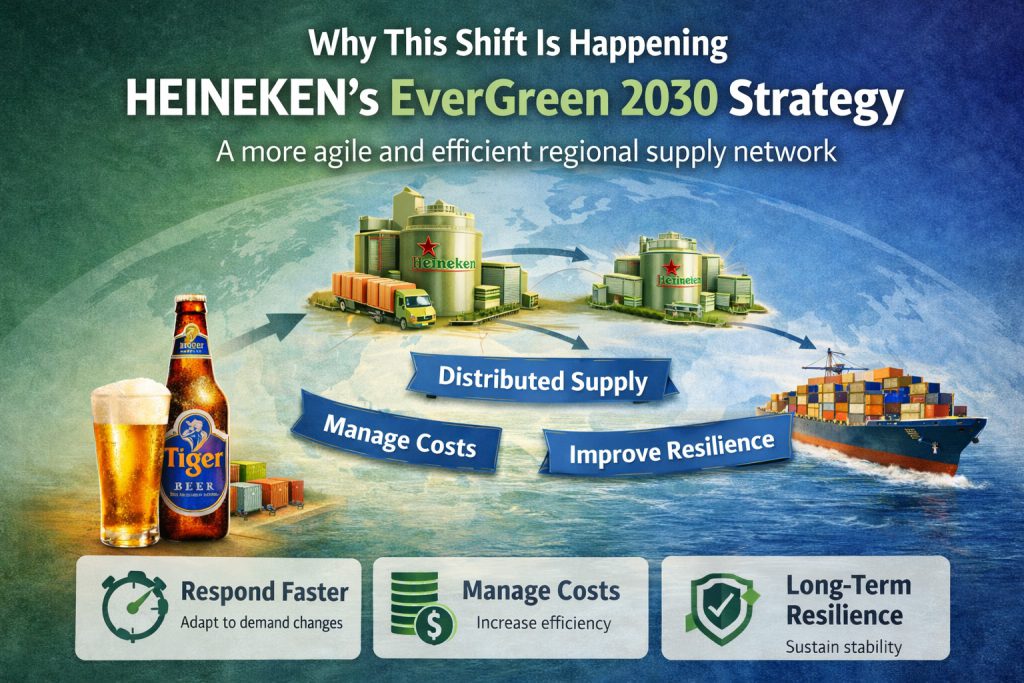
The move is part of HEINEKEN’s EverGreen 2030 strategy.
This strategy focuses on building a more agile and efficient regional supply network. Instead of relying on a single large production site, supply is distributed across multiple locations.
This allows the company to respond faster to demand changes, manage costs more effectively, and improve long-term resilience.
The Bigger Consumer Trend
Beyond operational efficiency, there is also a shift in consumer behaviour.
Younger consumers are drinking less alcohol and becoming more health-conscious. There is growing demand for lower-alcohol and alternative beverages.
As a result, demand patterns are becoming less predictable.
In this environment, large fixed production facilities are less flexible than a regional network that can scale production based on changing needs.
Singapore’s New Role
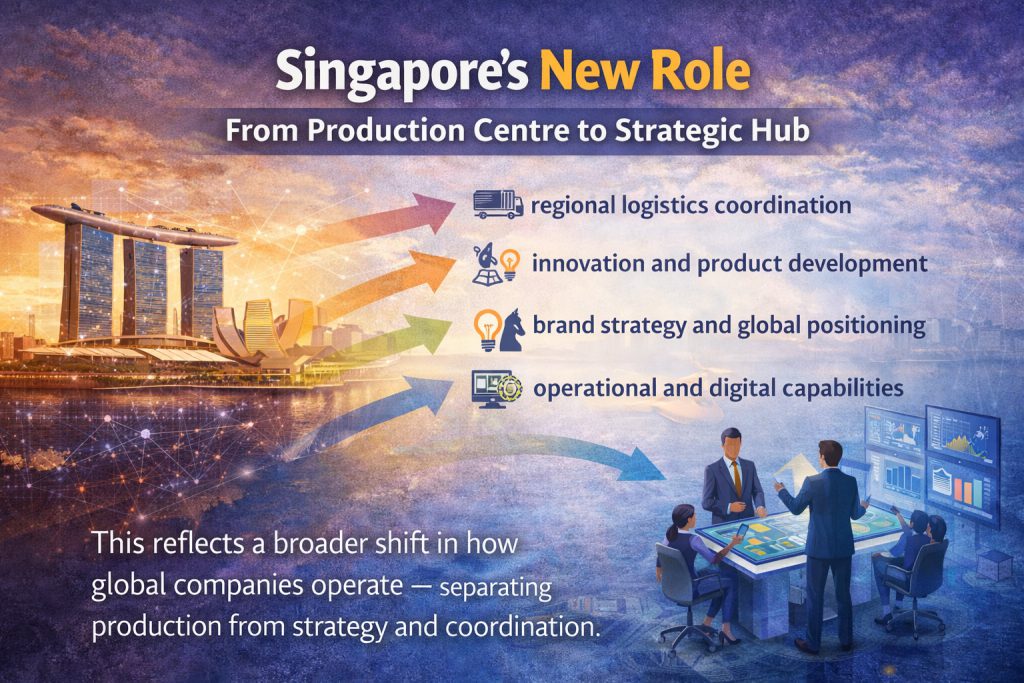
Singapore is transitioning from a production centre to a strategic hub.
Instead of focusing on large-scale brewing, its role will increasingly include:
- regional logistics coordination
- innovation and product development
- brand strategy and global positioning
- operational and digital capabilities
This reflects a broader shift in how global companies operate — separating production from strategy and coordination.
What This Means for Consumers
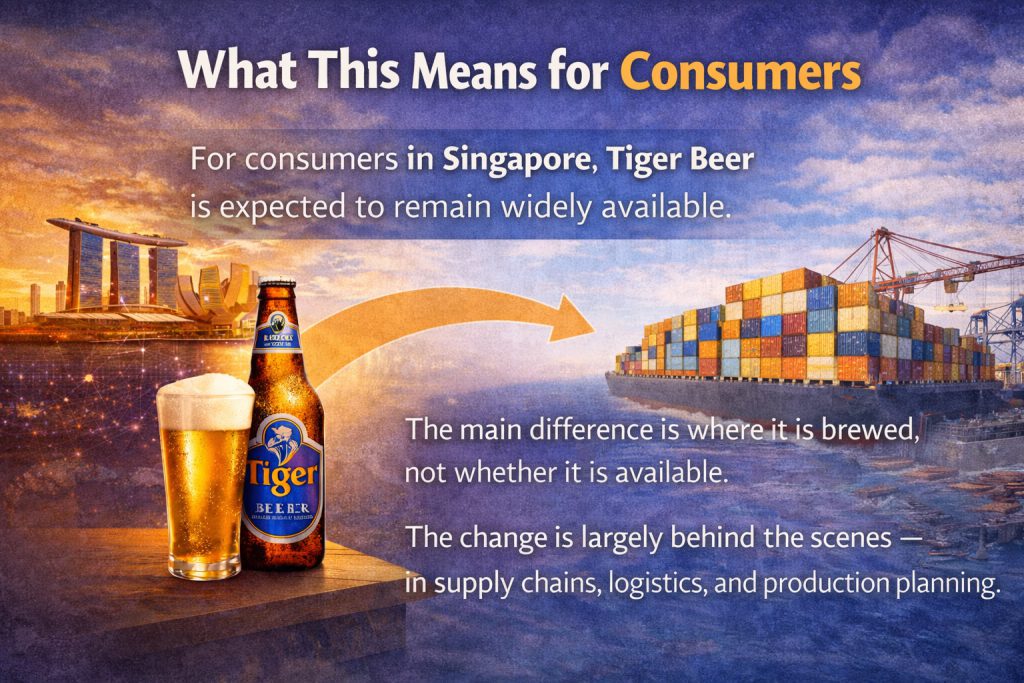
For consumers in Singapore, Tiger Beer is expected to remain widely available.
The main difference is where it is brewed, not whether it is available.
The change is largely behind the scenes — in supply chains, logistics, and production planning.
Final Perspective
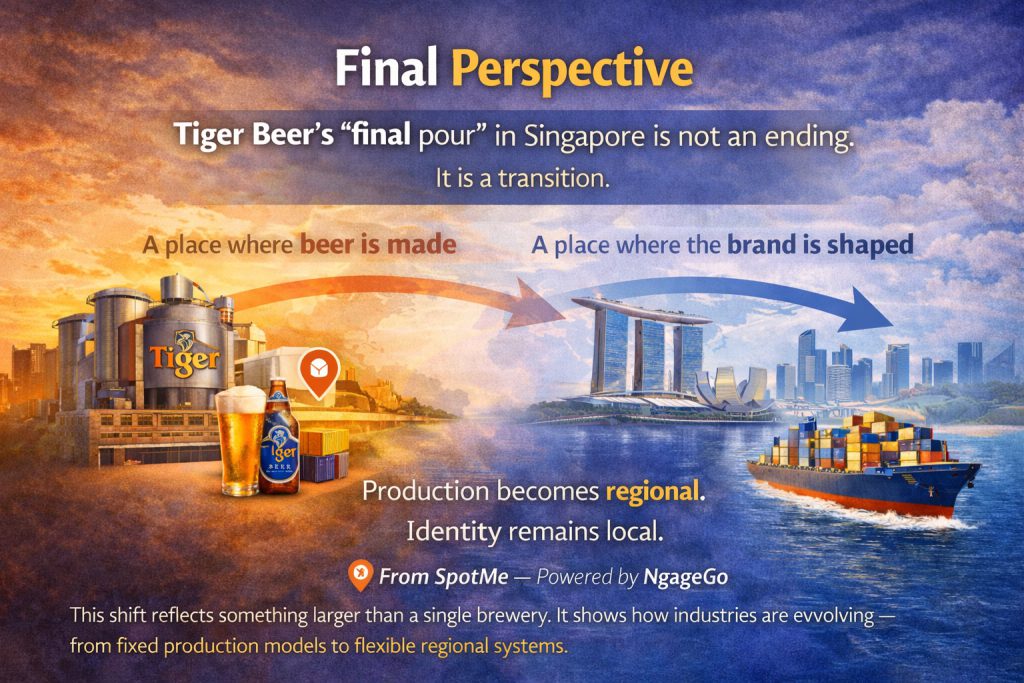
Tiger Beer’s “final pour” in Singapore is not an ending.
It is a transition.
Singapore is moving from being a place where the beer is made, to a place where the brand is shaped.
Production becomes regional. Identity remains local.
📍 From SpotMe — Powered by NgageGo
This shift reflects something larger than a single brewery. It shows how industries are evolving — from fixed production models to flexible regional systems.
Singapore is not stepping back. It is stepping into a different role.




Leave a Reply