

Over the past few weeks, there have been renewed discussions online about Nipah virus. Understandably, this has raised questions and concerns. This article is here to give the NgageGo community a simple, fact-based explanation—without panic, exaggeration, or misinformation.
What is Nipah virus?
Nipah virus is a rare viral infection that can affect humans. It was first identified in Southeast Asia and has since appeared occasionally in parts of South and South-East Asia.
While it can cause serious illness in some cases, it is not a common virus, and outbreaks are typically small and contained.
How does Nipah virus spread?
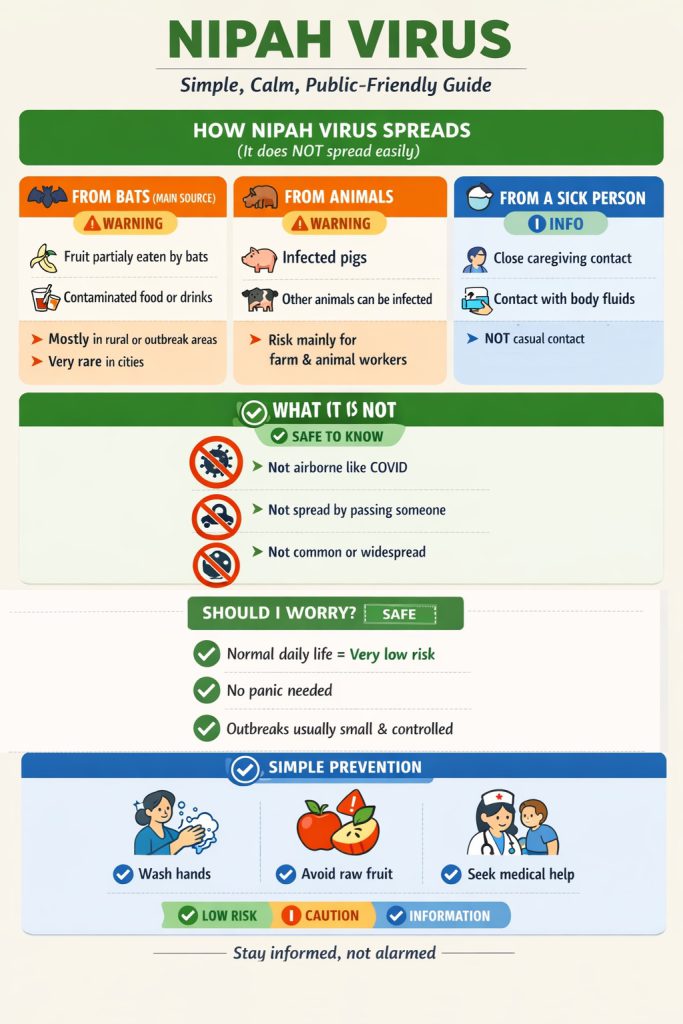
Nipah virus does not spread easily. Infection usually requires specific exposure, such as:
- Contact with food or drinks contaminated by fruit bats
- Close contact with infected animals (such as pigs, in past outbreaks)
- Close, prolonged contact with a sick person, usually in caregiving or healthcare settings
It is not spread by passing someone in public, sharing an elevator, or casual daily interactions.
Does Nipah virus spread in cities?
Most documented outbreaks have occurred in rural or semi-rural areas, often linked to food contamination or close household contact.
Cases can appear in cities, usually because:
- patients travel to hospitals for treatment, or
- caregivers are exposed during close contact
However, city-wide community spread is uncommon.
Do I need to wear a mask?
- Masks are not required for everyday activities
- Nipah does not spread like COVID-19 or influenza
- Masks are used mainly in healthcare or close caregiving situations
There is no recommendation for community-wide masking related to Nipah virus from global health authorities such as the World Health Organization.
What are the symptoms?
Early symptoms may look like a common illness:
- Fever
- Headache
- Cough or sore throat
- Fatigue
In rare severe cases, symptoms can worsen and affect breathing or the brain. This is why doctors take suspected cases seriously, even though the overall risk to the public is low.
Is there a cure or vaccine?
- There is no specific cure yet
- Treatment focuses on supportive medical care
- Vaccines are being researched and tested, but none are publicly available at this time
What should normal people do?
For most people, no special action is needed.
Simple precautions are enough:
- Wash hands regularly
- Avoid raw or unwashed fruit in outbreak regions
- Seek medical care if you have fever with confusion, especially after travel
The bottom line for the NgageGo community
- Nipah virus is rare
- It does not spread easily
- No masks or lifestyle changes are required
- Outbreaks are usually small and controlled
Staying informed is important—but staying calm is just as important.




Leave a Reply