The Inventor’s Leap into the Advanced Alien World
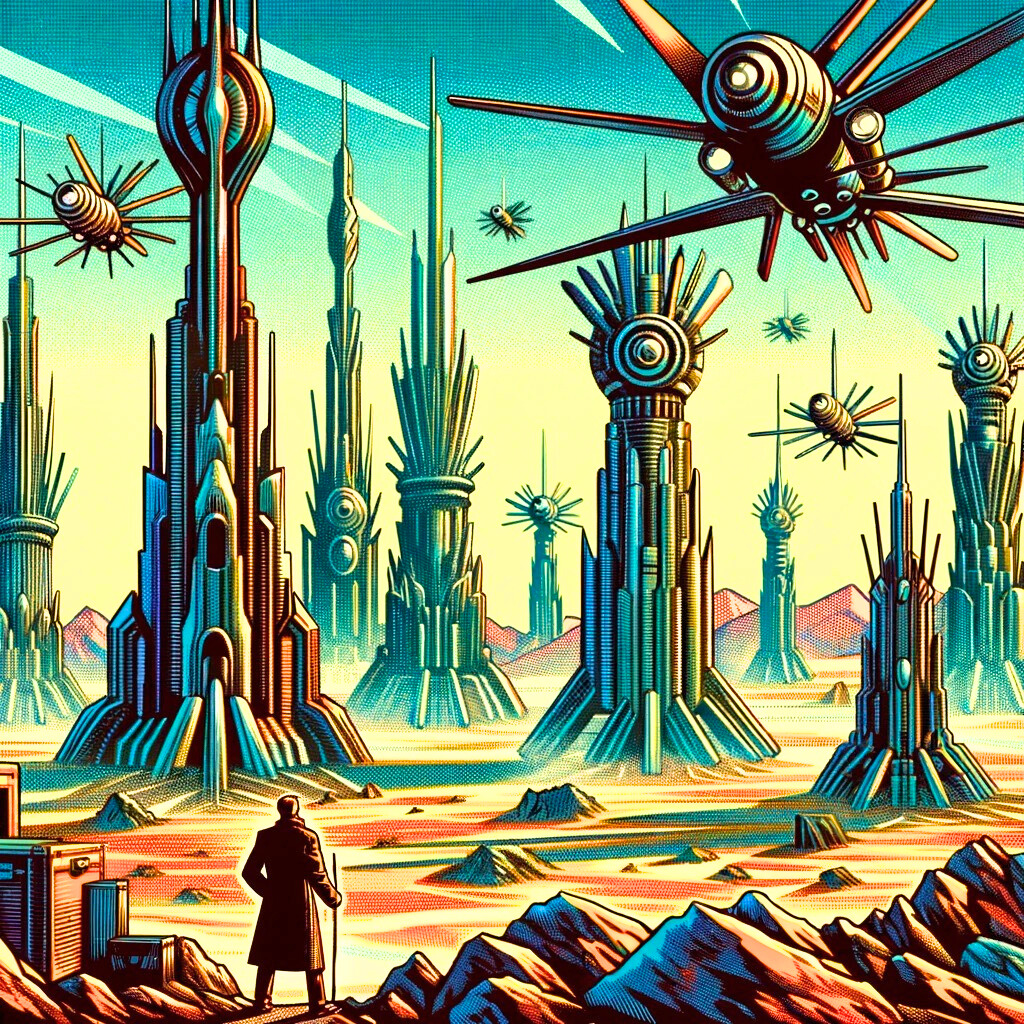
In the twilight of the 19th century, H.G. Wells, a visionary inventor, embarked on a journey that would transcend the bounds of time and imagination. With his time machine’s gears whirring softly, Wells anticipated a brief voyage into the future, eager to witness the marvels yet to come. Instead, a miscalculation propelled him far beyond his intended destination, into an era where Earth was no longer the domain of humanity. As the machine came to a halt, Wells found himself in the midst of an advanced alien world, a society that had risen on the ruins of human civilization, brought to its knees by a formidable extraterrestrial force.
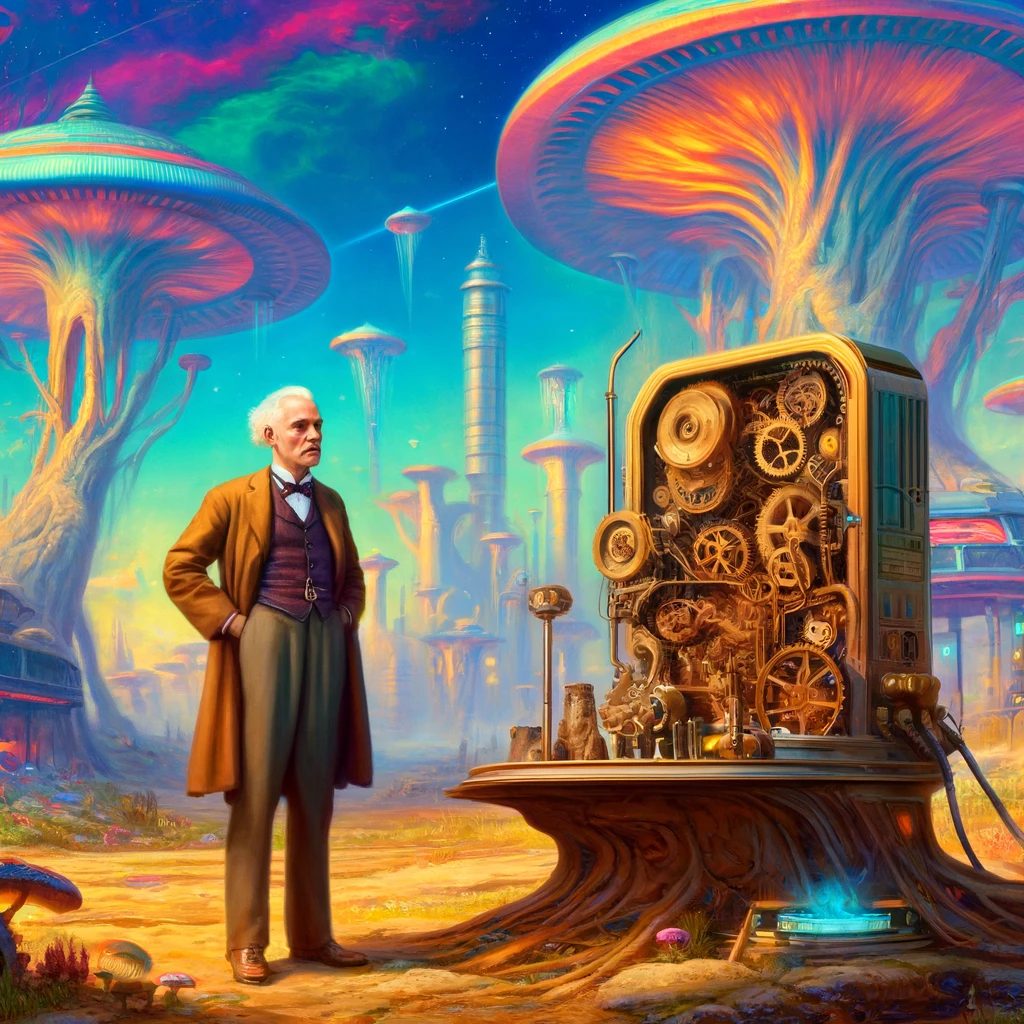
The landscape that unfolded before Wells was a blend of awe-inspiring technology and eerie desolation. Towering structures that defied the laws of physics dotted the horizon, while machines of unknown purpose flew through the air with silent grace. The Earth under the rule of the Martians was both a testament to their technological supremacy and a grim reminder of humanity’s fall.
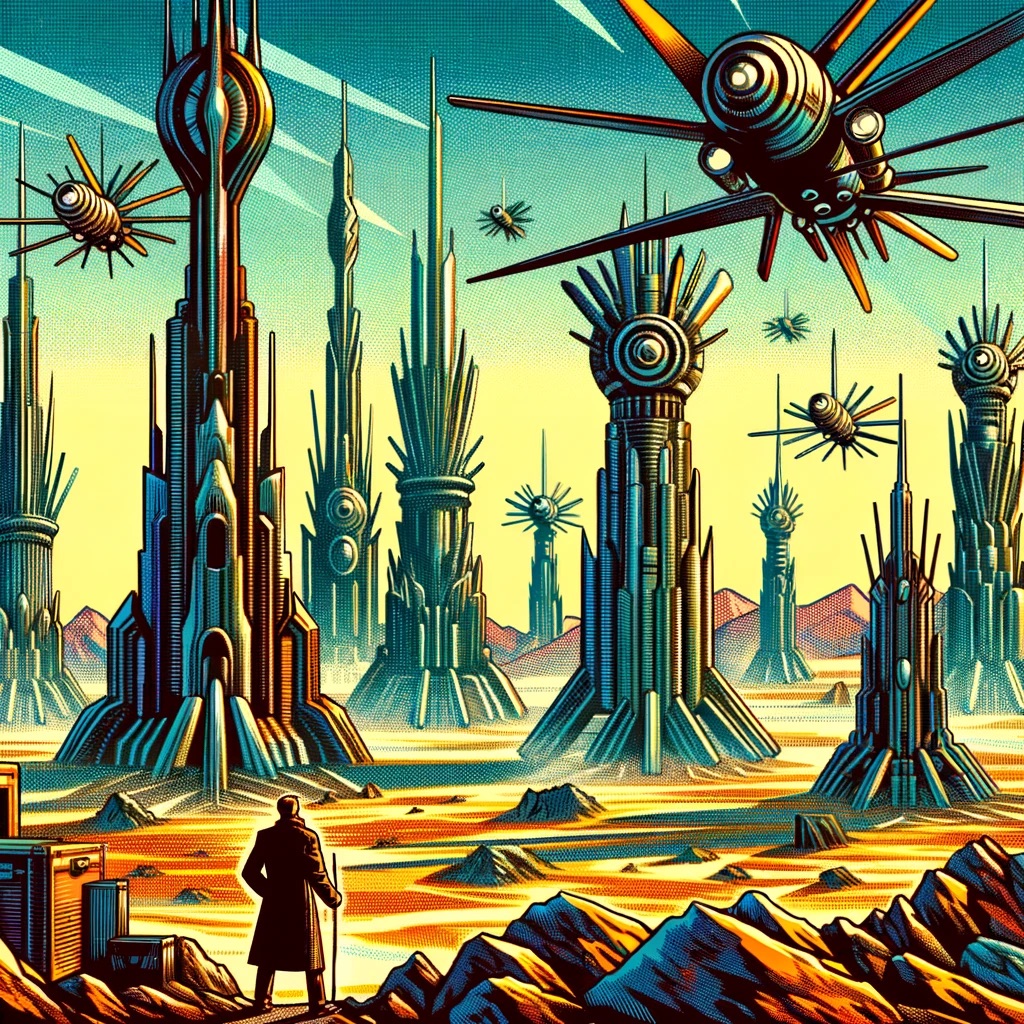
Determined to understand this new world, Wells ventured into the heart of the alien society, disguising his confusion and fear beneath a facade of scientific curiosity. He observed the Martians, noting their indifference to the remnants of human culture they had trampled underfoot. Their society was efficient, cold, and seemingly devoid of the emotional depth that characterized human interactions. Yet, amidst this foreignness, Wells’s keen eye began to uncover the underpinnings of Martian society— their structured social hierarchy, and perhaps most intriguingly, hints of dissent among them.
As days turned into weeks, Wells’s initial goal of mere survival evolved into a mission to unearth the secrets of Martian dominance. He learned of their vulnerability to Earth’s bacteria, a discovery that would later inspire a glimmer of hope among the surviving humans. But more immediately, Wells stumbled upon a network of human resistance fighters, remnants of a world that refused to be forgotten. They were scattered, disorganized, and desperate for any advantage in their struggle against the Martians.
Uniting his destiny with that of the resistance, Wells shared his knowledge of the Martian weaknesses. Together, they began to forge a plan to reclaim Earth from its conquerors. Wells’s time machine, once a mere vessel for exploration, became a beacon of hope—a means to gather allies, information, and weapons from different times, arming the resistance with the knowledge and technology needed to challenge Martian supremacy.
Amidst this brewing storm of rebellion, Wells found himself at the center of a complex web of alliances and secrets. His journey through time had transformed from a solitary quest into a collective struggle for the future of Earth. The inventor who had leaped into the unknown had become a leader, a symbol of the resilience and ingenuity of humanity.
As the resistance prepared to strike, leveraging the Martian vulnerabilities Wells had uncovered, the inventor couldn’t help but reflect on the journey that had brought him here. The advanced alien world that had seemed so alien and invincible was now a battlefield, where the fate of Earth would be decided. In the face of overwhelming odds, Wells’s leap into the unknown had ignited a spark of hope, a chance to reclaim their home.
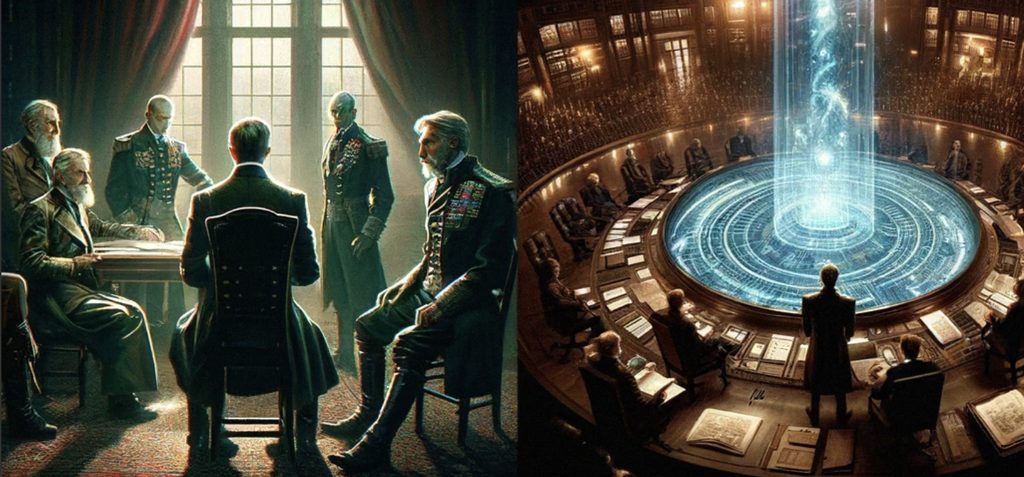
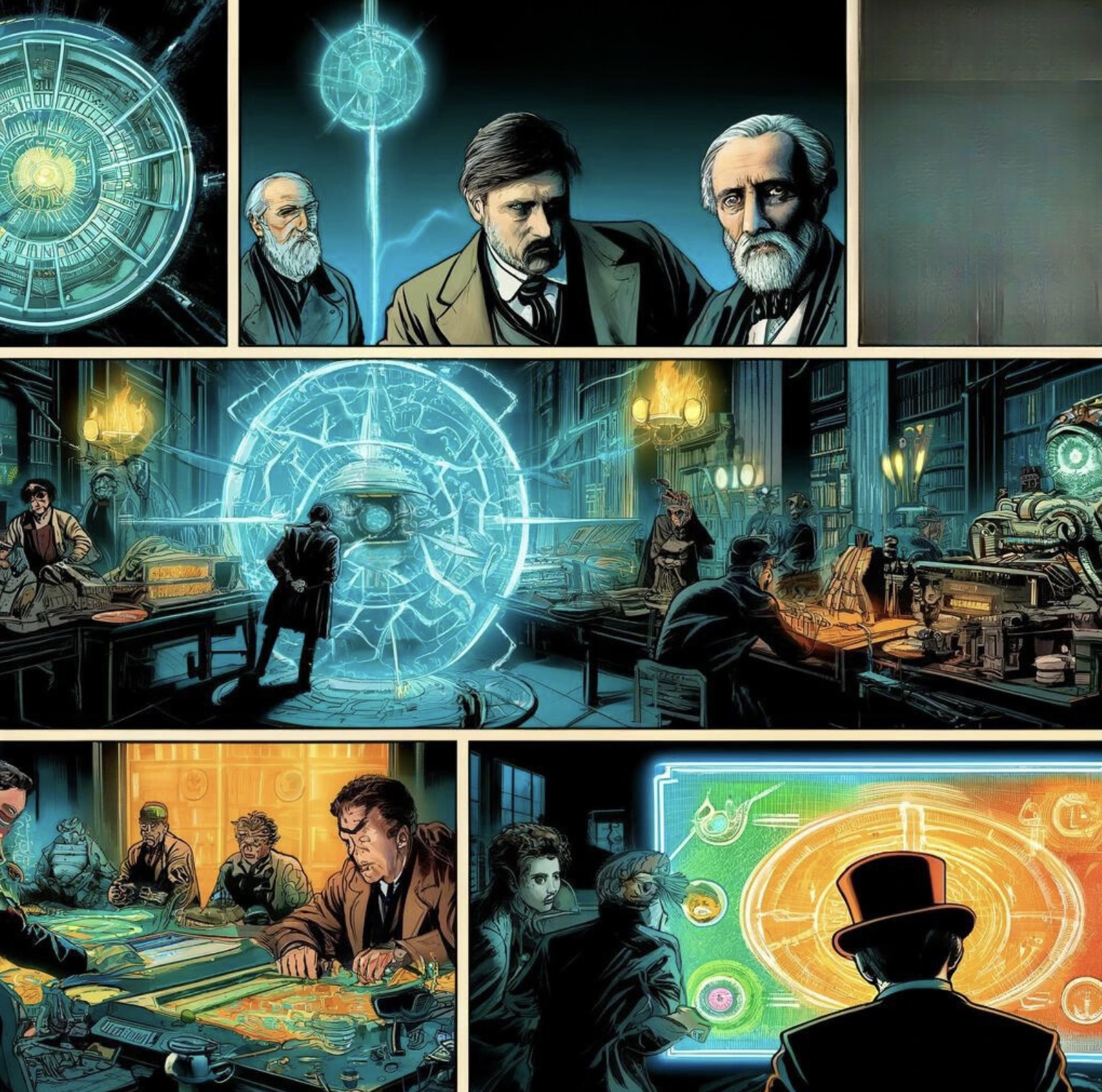
Amid his explorations, a serendipitous encounter with a group of human survivors marked a turning point in his journey. Led by Eva, a young historian who chronicled the fall of humanity and the rise of the Martians, Wells found a renewed sense of purpose. Alongside Eva were Leo, a scientist whose brilliance had been turned towards the survival of their kind, and Marcus, a soldier whose leadership had become a beacon for those who refused to yield.
Together, they represented a glimmer of hope, a resistance against the overwhelming might of the Martian empire. Wells, with his knowledge of both the past and glimpses of potential futures, became an invaluable ally. His insights into the workings of time and the vulnerabilities of Martian technology fueled their strategy, transforming their scattered efforts into a cohesive plan of resistance.
In the heart of an ancient library, surrounded by the relics of a bygone era, Wells and his companions plotted their course. The air around them was charged with a determination forged from the shared tragedies and aspirations of their collective experiences. It was here, amidst the whispers of history and the urgent need for a new future, that they crafted their rebellion, not just for survival, but for the reclamation of their world.
Their resolve was tempered by the knowledge of the daunting task ahead. They were few against the might of an empire that spanned the stars, yet within each of them burned the unquenchable fire of hope. As they prepared to embark on their mission, Wells realized that his leap into the unknown had led him to this moment, where the fate of humanity hung in the balance, dependent on the actions of a few brave souls willing to stand against the tide of history.
And so, within the dimly lit confines of the ancient library, H.G. Wells and his newfound companions found not just a plan, but a family forged in the crucible of their shared struggle. As the candlelight flickered against the gathering shadows, their silhouettes cast long against the stacks of books, a silent vow was made—a commitment to each other and to the future they dared to dream was still possible.